• Skip to primary navigation
  • Skip to main content
  • Skip to primary sidebar

The History Of Watches

All you need to know about Luxury Timepieces

  • The Greatest Watch Heist – The return of The Brequet Queen
  • About Us
  • Contact Us
  • How you can choose the right watch
  • Japanese Watch History
  • The American Watch History
  • The Evolution of Watches: Tracking Time Across the Ages
  • The Greatest Watch Heist – The return of The Brequet Queen
  • Timekeeping in an ancient Egyptian temple
  • Watch Brand List
  • Watch Glossary
  • Watches Blog
  • The Greatest Watch Heist – The return of The Brequet Queen
  • About Us
  • Contact Us
  • How you can choose the right watch
  • Japanese Watch History
  • The American Watch History
  • The Evolution of Watches: Tracking Time Across the Ages
  • The Greatest Watch Heist – The return of The Brequet Queen
  • Timekeeping in an ancient Egyptian temple
  • Watch Brand List
  • Watch Glossary
  • Watches Blog

Vintage watches

bedat & co watches history timeline

February 15, 2023 by aabbady Leave a Comment

bedat & co watches

In 1931 in Lugnez, near Porrentruy, Simone Bédat began at the Lang SA watch-case manufacturer at the age of fifteen and a half.

In 1934 she became head clerk of the sales department.

After around 10 years she  joining the Camy watch company in Geneva, where she worked in close cooperation with a certain Raymond Weil who was to be appointed Managing Director.

In 1975, she left Camy and joined forces to create the Raymond Weil brand

In 1989 The brand became the 5th leading Swiss watch exporter

In 1995, Simone Bédat decided to sell her (24%) stake to Mr. Raymond Weil.

In 1996, She left the firm, along with her son, Christian, who had joined the company in 1990 and exercised various responsibilities, ultimately becoming art director.

In 1996 Christian and Simone Bedat founded the Bedat & Co of Geneve Watch Company.

In 2000 the company taken into the fold of the Gucci Watch Group Bedat is renowned for its collections who stay true in name to watches and time itself in the universal simplicity of numbers comprising

In 2003 Launch of the N°1 collection.

In 2004 Launch of the N°8 collection.

In 2006, She leaves the company

IN 2007 The company celebrates its 10th birthday

IN 2008 Launch of the N° 2 collection.Launch of the 1st ever BEDAT & C° boutique in Kuala Lumpur, Malaysia.

2009 Aquisition of BEDAT & C° by Luxury Concepts.BEDAT & C° remains a 100% Swiss company with distribution on 5 continents.

In Bedat & Co comprises you can find 5 collections. Each collection is has a number: 1, 2, 3, 7 and 8. Numbers, instead of names, and this is the best identifications of collection. The numbers is easy to remember and easy to translated through different languages throughout the world.

Each of these numbers corresponds to specific shape:

N°1: Square-shaped cases curved at 3 o’clock and 9 o’clock

N°2: Oval-shaped cases

N°3: Tonneau-shaped cases

N°7: Rectangular-shaped cases curved at 3 o’clock and 9 o’clock

N°8: “Round in a cushion” shaped cases

Please remember that this is an unofficial account of the history of this company, Should you happen to find any mistakes with our information then please let us know at

Email Us

Filed Under: Luxury Timepieces Tagged With: bedat & co watches, luxury pieces, Luxury Timepieces, Old watches, Timepieces., Vintage watches, watches, watches history

Baume et Mercier vintage watch

February 15, 2023 by aabbady Leave a Comment

In 1830 the Baume family opened one of the first comptoirs horlogers (watch shops) in the Swiss Jura region in the village of Les Bois. “Frères Baume” soon became a major watch company, thanks to the commercial flair and rigorous industrial methods of the two brothers, Louis-Victor and Joseph-Célestin Baume, who strictly followed their motto: “Accept only perfection. Only manufacture watches of the highest quality.”

From the beginning, the objective of the “Frères Baume” company was to make high-quality traditional watches enriched by various technological breakthroughs of the era. The Baume family were equally innovative commercially, when one of the two brothers, Joseph-Célestin, set up a branch in London named “Baume Brothers”. Baume Brothers rapidly expanded throughout the British Empire, from India through Singapore and Burma to Africa, and even became a pioneer in selling watches in emerging markets such as Australia and New Zealand.

By 1876, when the second generation took over, “Frères Baume” had already acquired a solid international reputation for its simple watches, chronographs and Grand Complication models, including minute repeaters, calendars and tourbillons. The company management was again shared by two brothers, sons of the co-founder, Louis-Victor. Alcide Baume was in charge of production in Les Bois, while Arthur Baume was based in London and handled international marketing. The company soon set up branches in Geneva, Switzerland and Philadelphia, in the United States.

Baume watches earned ever-growing success and recognition under the impetus of the second generation.

The House distinguished itself at the national exhibitions and world fairs that began to be organized from the second half of the 19th century onwards, in Paris (1878 and 1889), Melbourne (1990 and 1895), Zurich and Amsterdam (1883), London (1885 and 1890) and Chicago (1893), winning ten Grand Prix awards and seven gold medals.

Baume watches also set accuracy records in timekeeping competitions, and particularly the timing trials run by Kew Observatory near London.

When the Baume company first competed in the Kew Teddington competition in 1885, three of its watches were ranked among the top seven, and the following year, four of them won awards.

In 1892, Baume earned the highest score in the competition (91.9 points out of a 100) with a split-second chronograph, an all-time record that remained unbeaten until over a decade later.

Up to the early 20th century, the brand won a steady succession of prizes for its simple and complicated watches, all equipped with the most advanced technological features.

In London, Arthur Baume became a leading figure in the United Kingdom. He was named a knight of the Legion of Honor, and later became an officer, and was twice decorated by French President Poincarré in person.

The King of Belgium made him a Grand Officer of the Order of Leopold II, and he was received at the official state dinner given in honor of the King of England, George V, and Queen Mary. A member of the Royal Geographical Society, Arthur Baume was appointed president of the British Horological Institute in London.

The end of World War I in 1918 brought sweeping changes in industry, the arts, and society in general. Women’s emancipation led them to wear jewelry watches as brooches, long necklaces or on the wrist, a trend made possible by the miniaturization of watch movements.

After proving its use in a military context, the wristwatch gradually took over from the pocket watch as the masculine timepiece of choice.

Baume witnessed the emergence of a new generation, and the young William Baume, a great visionary and an accomplished watchmaker, was eager to take advantage of the new opportunities afforded by the ebullient mood of the era. Having by then settled in Geneva, he decided to partner with a colorful figure named Tchereditchenko, who subsequently adopted his French mother’s family name and became known as Paul Mercier.

Born in Odessa to a Russian father, Paul Mercier was a passionate and refined individual, a dedicated art-lover who spoke seven languages and was endowed with exceptional business acumen.

Despite their very different yet complementary temperaments, the two men, shared the same vision of contemporary watchmaking, and decided to join forces in 1918 to create Baume & Mercier.

William Baume handled technical aspects, while Paul Mercier was in charge of design and the commercial side of the business. Together, they established a full-fledged watch manufacture in Geneva, making top-quality watches as well as movements that were exported to the United States.

In 1919, barely a year after the company was set up, Baume & Mercier movements were awarded the “Poinçon de Genève” or Geneva Hallmark, the highest token of fine craftsmanship in watchmaking. A year and a half later, Baume & Mercier had become the watch brand producing the largest number of movements certified by this prestigious quality label.

On March 21st 1921, the Department of Trade and Industry of the Republic and Canton of Geneva awarded “Messrs Baume and Mercier, watchmakers in Geneva”, a diploma “certifying that their company ranks first in the number of pieces that received a hallmark at the official government office for voluntary testing of Geneva watches in 1920.”

In 1924, Baume & Mercier appeared in the Davoine official watch industry directory, the benchmark register of watchmaking companies, as one of the four Geneva-based manufacturers alongside Patek Philippe, Vacheron Constantin and Haas Neveux.

Focusing firmly on high-quality watchmaking combining technical excellence with a contemporary look, the company enjoyed swift success despite the major crises that hit the Swiss watch industry in the early 1920s and after the 1929 stock market crash.

The period between the late 1930s and the 1950s saw the baton being passed on to a strong new personality at the head of Baume & Mercier, the Count Constantin de Gorski.

William Baume withdrew from the company in 1935 for health reasons, and Paul Mercier sold his shares in 1937 to the Ponti family,famous jewelers and goldsmiths from northern Italy.

During the 1940s and throughout World War II, Baume & Mercier chronographs became watches of choice that are still highly sought-after collector’s items today.

After the war, Baume & Mercier launched one of its most successful models: the Marquise.

This jewelry watch, set in a “bangle” type bracelet, asserted itself as the leading post-war ladies’ model and remained a brand best-seller until the early 1960s.

In 1952, Baume & Mercier acquired a new production facility for its chronographs by buying up the C.H. Meylan factory in the village of Le Brassus, in the Joux Valley.

In 1964, in order to reinforce it’s brand identity, Baume & Mercier chose the Greek symbol PHI as its new visual brand emblem.

Considered since Antiquity to be the “golden section” representing perfect proportions, the PHI appeared from then on as the Baume & Mercier logo on all its watch dials.

It was from this time onwards that Baume & Mercier acquired its status as an affordable luxury brand, a positioning it continues to uphold.

The brand also accentuated its avant-garde, innovative approach, especially during the 1970s.

In 1971, Baume & Mercier was one of the first brands to adopt the new electronic tuning-fork movements, forerunners of quartz, in its Tronosonic model.

In 1973, this was followed by the innovative Riviera model, one of the very first steel sports watches featuring an original twelve-sided design. The Riviera was to become Baume & Mercier’s best-seller and its flagship model for 20 years.

In 1972, the brand caused a sensation in the field of ladies’ watches by introducing the Mimosa and Galaxie models, both of which won the Golden Rose at the Baden-Baden international watch and jewelry competition held in Düsseldorf, Germany – the most important contest of its kind at the time.

In 1973, Baume & Mercier once again earned the supreme Golden Rose distinction for its splendid Stardust model featuring an onyx dial surrounded by 138 diamonds.

The 1980s witnessed the global success of the Linea ladies’ model, and in 1988 the destiny of Baume & Mercier took a new turn when the luxury group that would later become Richemont bought up both Piaget and Baume & Mercier.

Within the Richemont Group, Baume & Mercier acquired newfound independence and renewed vitality.

The brand displayed noteworthy creativity, introducing a wave of models in its jewelry, classic and sports watch ranges: Catwalk (1997) revived the cuff-watch; Capeland (1998) played the adventurer; and Hampton (1994) became a classic rectangular steel watch and the brand’s new flagship model.

In 2002, Baume & Mercier took a further step towards autonomy by opening its own workshops in Les Brenets, in the Swiss Jura.

This represented a genuine return to roots in more then one way: a return to production in the Jura, the cradle of the Baume company (although the Baume & Mercier headquarters remained in Geneva), and a return to a production mode known as établissage (or project management) and used by the “Frères Baume” throughout the 19th century, but combined with a full set of modern advantages.

The company continued along its successful path with new models such as Classima Executives, Diamant, iléa, as well as the Haute Horlogerie William Baume collections, and a number of sporting and sophisticated models interpreted in Riviera or Hampton versions.

Loyal as ever to its origins, Baume & Mercier continues to offer a range of authentic timepieces with a contemporary feel, that embody the attention to detail, the high quality standards, and the respect for the rules of fine craftsmanship on which the company has built its international reputation since 1830.

From Baume et Mercier company website.

https://www.baume-et-mercier.com/en/home.html

Please remember that this is an unofficial account of the history of this company, Should you happen to find any mistakes with our information then please let us know at

Email Us

Filed Under: Luxury Timepieces Tagged With: Baume et Mercier, luxury pieces, Luxury Timepieces, Old watches, Timepieces., Vintage watches, watches, watches history

Ball The Railroad watches

February 15, 2023 by aabbady Leave a Comment

Ball The Railroad watches

Webb C. Ball was born in Fredericktown, Ohio on October 6, 1847, later on start as jewelry retailer and became a jeweler & watchmaker. When Standard Time was first adopted in 1883, he was the first jeweler to use time signals, bringing accurate time to Cleveland, Ohio.

In 1891, After the infamous the mail train collision between Lake Shore and Michigan Southern Railways at Kipton, Ohio, which occurred because an engineer’s watch had stopped unnoticed for about 5 minutes,, the commissioner of railroads appointed Webb C. Ball to develop and set strict accuracy standards for railroad watches and clocks. The Ball Watch Company of Cleveland Ohio was formed. Interestingly it never manufactured watches or clocks. Webb C. Ball strongly enforced the strict standards and allowed those watches and clocks that met or exceeded the strict standard to be signed with his name. By the early 1900’s Webb C Ball of Cleveland Ohio, was the general time keeper for over 125,000 miles of track in the U.S., Mexico and Canada

In 1893, seizing the opportunity, Ball contracted with watch companies such as E. Howard, Waltham, Elgin, Hamilton, Hampden and others, to provide him with watch movements that met his strict standards. He then inserted these movements into high quality cases that bore the name of the Ball Watch Company on the outside. By 1908, the Ball Watch company was furnishing high grade pocket watches to over 100 different railroad systems.

In 1900, Webb Ball established railroad watch standards and conducted time inspections for over 54 railroad companies. He approved 37 different watches for railroad use.

In 1902, The Vanderbilt railroad system that developed and operated the fastest long-distance train service in the world kept its trains running “on the Ball.”

In 1913, Ball introduced the twentieth century model case with his patented “safety bow,” a feature that would last for over 40 years and made Ball’s watches some of the most recognizable in the railroad watch industry.

In1921, His efforts were honored by the Horological Institute of America in Washington.

1922: Webb C. Ball died at the age of 75.

By 1990s, Ball Watch changed owners, but remained loyal to its philosophy. Determination and the love of a challenge, precision, strength, performance and humility are all human traits that defined the early pioneers of rail transport and which today still reflect the values of Ball Watch.

Watches and clocks were signed “Webb C. Ball Company”, “Ball Watch Co., Cleveland” sometimes with “Official Railroad Standard” or “Ball Standard Dial, Pat. Applied. For”. Ball watches and clocks were considered the finest watches by rail men at the beginning of and well into this century. They are becoming increasing difficult to find, particularly clocks with this signature.

Today, Ball Watch has maintained a significant presence in the watch landscape, through superbly designed mechanical watches, with unique styling to match their historical roots.

https://www.ballwatch.com/global/1/collections/series/official-railroad-watch—31.html

Please remember that this is an unofficial account of the history of this company, Should you happen to find any mistakes with our information then please let us know at

Email Us

Filed Under: Luxury Timepieces Tagged With: Ball The Railroad watches, luxury pieces, Luxury Timepieces, Old watches, Timepieces., Vintage watches, watches, watches history

Aviator The Pilot’s watches

February 15, 2023 by aabbady Leave a Comment

Aviator The Pilot’s watches

Russia is the world’s largest manufacturer of Aviation wristwatches, with a history going back to 1927 when the Russian government decided to build quality timepieces for its military.  In the decades that followed, the Russian watch industry produced timepieces specifically built to exacting military standards that were not originally available to the public.  The direct descendants of these watches are available today in the Aviator line.  From highly complicated chronographs to big-dialed, easy-to-read timekeepers, the Aviator watch by Volmax is the culmination of three quarters of a century of aviation watch development.

This watch line is distinguished by strict military design and functionality. The design is inspired by classical aviation models. Case is made of brushed steel with a tough look and minimalistic  strict  shape.  The dials have a unique exterior, while  applied signs and numerals with Superluminova coating provide an excellent vision in all possible conditions. High quality leather strap  with  contrast white stitching perfectly fits the watches.

Launched at the turn of the millennium, the Volmax Company set forth with the singular goal to create a new and improved Russian watch while building on the storied history of navel, aviation and space exploration timekeeping.  With the intention to compete with the best of the western watchmakers, Volmax focused on innovative design, strict quality control and truly collectible timepieces from day one.

In 2002, the company registered three of the most famed Russian watch brands, Aviator, Buran and Sturmanskie, with the latter holding the distinction of being the first watch in space on the wrist of Yuri Gagarin. 

Today, the Aviator line is the official watch of the Russian military aerobatic flying team, the SWIFTS, who fly the MiG 29 Fulcrum at mach speeds in wing-tip to wing-tip maneuvers.  Sturmanskie, or “Navigator”, watches proudly continue their unmatched history of use in space, with commemorative editions of Gagarin models and numerous other direct descendents of timepieces worn in orbit, including the first used during a space walk. Volmax set itself apart from other Russian watch companies at the outset, with a direct link to the heritage of the First Moscow Watch Factory combined with young, aggressive watchmakers determined to revive the Russian watch industry to its previous glory.  The watchmakers who build the Volmax timepieces in Moscow have a combined experience of more than 300 years.

Using top-quality materials in today’s offering, like sapphire crystals, titanium and surgical grade stainless steel cases, and highly decorated movements, Volmax strives to be more than utilitarian in its production. Largely producing limited editions of fewer than 1,000 pieces and infusing the designs with historical accuracy and underpinnings, the goal is “quality over quantity.” The result is an unmatched blend of history, quality and design that utilizes the best of the old world and the new.  

Ten years into the new century, Volmax is now officially distributed in more than 25 countries around the globe, and has been presented in some of the most prestigious watch fairs, including multiple times at Basel in Switzerland .

Volmax is the new definition of Russian timekeeping.

From the company website.

https://aviatorwatch.swiss/en/ow

Please remember that this is an unofficial account of the history of this company, Should you happen to find any mistakes with our information then please let us know at

Email Us

Filed Under: Luxury Timepieces Tagged With: Aviator The Pilot’s watches, luxury pieces, Luxury Timepieces, Old watches, Timepieces., Vintage watches, watches, watches history

Audemars Piguet watches

February 14, 2023 by aabbady Leave a Comment

Audemars Piguet

Audemars Piguet

Audemars Piguet long history dates back to 1875 when a then 23 year old Jules Audemars joined forces with a 21 year old Edward Piguet, also a trained watchmaker, both of them having learned their trade after finishing public school in their hometown of Le Brassus. At the time, Jules was fabricating complicated “ebouches” (blank watch movements, to be finished and fitted by a watch manufacturer) from a workshop he had set up at his parents farm, while Edward was working as a self employed “repasseur” (a master watchmaker who performs the final regulation on a watch). Thanks to orders pouring in from Geneva Audemars was forced to engage more watchmakers, one of whom was Edward Piguet, whom he knew from schooldays. Soon after, they decided to cease to work as suppliers to established firms and instead manufacture and market the complicated watches that were their mutual passion. Audemars, Piguet & Cie was thus born.

1892

Development and production of the first minute repeater wristwatch.

1915

The smallest five-minute repeater calibre ever made, with a diameter of just 15.80 mm.

1924

First jumping-hour wristwatch.

1925

World’s thinnest pocket-watch calibre 81.32 mm.

1934

First skeletonised pocket watch.

1946

World’s thinnest wristwatch.

1957

First Audemars Piguet wristwatch with a perpetual calendar.

1967

World’s first thinnest selfwinding calibre with central rotor (2.45 mm).

1972

Birth of the Royal Oak, the first steel high-end sports watch.

1978

First selfwinding ultra-thin perpetual calendar wristwatch with central rotor.

1986

First ultra-thin (5.5 mm thick including the case) selfwinding tourbillon wristwatch.

1989

Smallest selfwinding perpetual calendar watch.

1994

First wristwatch with Grande and Petite Sonnerie, quarter repeater striking on two gongs.

1996

First selfwinding Grande complication watch

1997

First Grande Sonnerie chiming model, minute repeater with three gongs and three hammers.

2000

First model with Equation of Time, sunrise and sunset times and perpetual calendar.

2006

Audemars Piguet direct-impulse escapement.

2008

First watch featuring a carbon case and movement.

2009

High-frequency chronometer with Audemars Piguet escapement and double balance-spring.

From the company website

https://www.audemarspiguet.com/com/en/home.html

Please remember that this is an unofficial account of the history of this company, Should you happen to find any mistakes with our information then please let us know at

Email Us

Filed Under: Luxury Timepieces Tagged With: Audemars Piguet, luxury pieces, Luxury Timepieces, Old watches, Timepieces., Vintage watches, watches, watches history

ASUAG – The Swatch Group

February 14, 2023 by aabbady Leave a Comment

ASUAG - The Swatch Group

Swatch subsidiary ETA SA, which is based in Grenchen, Switzerland, furnishes many OEM brands, such as LVMH (which markets TAG Heuer, Hublot and Zenith watch lines) and Richemont (which markets amongst others.

The Swatch Group known as Société Suisse de Microelectronique & d’Horlogerie or SMH until 1998–is the world’s leading supplier of watch movements and finished watches, accounting for as much as 25 percent of total world production, while capturing more than ten percent of all watch sales. The Swatch Group is more than its flagship Swatch brand–which alone accounts for half of the company’s profits, and, in the late 1990s has given its name to a 15-store chain of retail Swatch Megastores.

The Swatch Group also includes many of the world’s most prestigious names in watch design, including Omega and Blancpain (luxury); Rado and Longines (high end); Tissot, Certina, Mido, Balmain, Hamilton, and Calvin Klein (mid); and FlikFlak, Lanco, and Swatch in the ‘basic’ or low-end market. In addition, the company’s exclusive Endura label crafts custom-designed watches.

In an era of increasing market segmentation, Swatch remains a tightly vertically integrated company, manufacturing not only watches, but their movements and motors and other basic components. The company produces components–through a range of subsidiaries, including ETA, itself Switzerland’s largest movements manufacturer–for much of the Swiss watchmaking industry, as well as for the member brands of the Swatch group. In total, Swatch has nearly 450 reporting business units, principally in Switzerland, but implanted throughout the world. Its 50 production centers are located in Switzerland, the United States, France, Italy, Germany, Thailand, Malaysia, China, and the Virgin Islands.

Beyond watches and their components, Swatch has long flirted with high technology, fabricating microprocessors, smartcard technology, portable telephones, and other future-oriented designs, such as wristwatches that double as telephones, credit cards, even concert tickets.

In October 1998, Swatch debuted its latest venture, or adventure, as some would have it: the Smart car, a project in partnership with the Daimler Benz corporation. The chief architect behind these projects and the Swatch group’s success has been Nicolas Hayek, who, at more than 70 years of age remains company chairman. Hayek is credited with leading Swatch from the bankruptcy of its founding companies to more than SFr 3.05 billion in annual sales in 1997.

Out of Time in the 1970s

Switzerland’s traditional dominance of the international watchmaking market foundered in the 1970s. The arrival of digital technology and the use of quartz-based timing in so-called quartz analog watches gave rise to a new breed of cheap Asian watches and to a new generation of giant Japan and Hong Kong-based industrial manufacturers. The Swiss market, with its tradition of small, often family-owned firms, and its continued focus on more expensive, labor-intensive mechanical movements, was caught by surprise by the gains made by such brands as Seiko and Citizen.

While Swiss watchmakers had been among the first to debut digital watches&mdash′iced at the high end of the market at their debut in the late 1960s–most of the Swiss industry considered these and quartz-based timing a fad that would swiftly pass. Instead, demand for these easily produced watches (in contrast to the meticulous craftsmanship needed for most mechanical watches) encouraged a whole new crop of worldwide competitors to enter the field. By the mid-1970s, the market had become glutted, prices plunged, and the entire industry underwent a crisis, even as demand for digital watches and their LED or LCD faces vanished. The appearance of the first quartz analog watches, which supplanted mechanical movements with quartz-based “modules” while retaining traditional analog watchfaces, however, would prove more enduring. Here again, however, the Swiss industry clung to mechanical movements, convinced that the quartz fad would soon end as well.

By the end of the 1970s, the Swiss watchmaking industry was in serious trouble. Many spoke of exiting the watchmaking market altogether, or limiting craft-based production to the high-end and luxury markets. Two of the largest Swiss watchmakers were among those facing collapse. Both Allgemeine Schweizerische Uhrenindustrie (ASUAG) and Societé Suisse pour l’Industrie Horlogère (SSIH) had been formed in the 1930s depression era, grouping, in SSIH’s case, such long-revered names in watchmaking as Omega and Tissot. Omega, founded in the mid-19th century, had achieved prominence as one of the world’s top luxury brands, with its mechanical watches and timepieces not only an Olympic Games standard, but also the choice of U.S. astronauts.

As French-speaking SSIH concentrated on watches, its German-speaking rival ASUAG focused on movements and other component parts, while also adding watchmaking subsidiaries and brands. By the 1960s, both ASUAG and SSIH were among the world’s largest watchmaking firms. ASUAG itself had built a position as one of the Swiss industry’s chief suppliers of movements and watch components. Yet, by the beginning of the 1980s, faced with an onslaught of cheaply produced quartz-based and digital watches, both ASUAG and SSIH were facing bankruptcy proceedings. In addition to the glut of cheap watches, ASUAG and SSIH had suffered from important economic factors: the devaluation of the U.S. dollar in the mid-1970s vastly increased the cost of importing Swiss watches into what had been one of the industry’s chief marketplaces; at the same time, Switzerland could not hope to compete with the low wage and production costs available in the Far East.

In the late 1970s, both companies, joined by the Swiss industry as a whole, attempted to reverse their fortunes, investing massively in quartz module production facilities. By the end of the decade, the industry had succeeded in bringing all quartz component manufacture needs within the country’s borders. ASUAG had been among the earliest to adopt this new manufacturing trend, and had succeeded in becoming an important supplier of quartz movements. Yet the move proved too late. As the decade closed, more than half of the 1,600 Swiss watchmakers present at the start of the decade had gone out of business. SSIH, which had become the country’s largest watchmaker, was bleeding: after suffering large losses in 1980, it received a US$150 million bailout from its banks. Nevertheless, its losses continued.

By 1982, it was the turn of ASUAG and SSIH to face liquidation procedures. Foreign competitors hovered around the two companies, eager to buy up such famous watch brands as Longines, Hamilton, Tissot, Rado, and Omega. Observers of the Swiss industry seemed resigned to see watchmaking fade into the fabric of Swiss history.

The Hayek Era of the 1980s

Many credit the survival of ASUAG and SSIH’s operations to the actions of one Nicolas Hayek. (Hayek himself would claim to have rescued the entire Swiss watchmaking industry, to the indignation of many of his competitors.) Hayek was the head of Hayek Engineering, which had built a reputation in the 1970s as a leading manufacturing consultant. In 1982, Hayek was hired by ASUAG and SSIH’s creditors to investigate the Swiss watchmaking industry and, as Hayek claimed, “produce a report saying it’s impossible to produce in Switzerland because the Japanese are much cheaper, labor is cheaper” (European, June 19, 1997).

Despite the banks’ desire to shut down the Swiss watchmaking industry, and sell off its jewels to recoup some of their losses, the so-called Hayek Study would lead the Swiss industry into a new era. Chief among Hayek’s recommendations was to merge the two longtime rivals into a single company. Hayek’s second recommendation proved perhaps still more radical: the production of a new type of watch directed at the low-cost (under US$50) watch market. The banks agreed to the merger, creating the ASUAG/SSIH entity in 1983. But the banks refused Hayek’s idea for the new type of watch. Instead, they offered to sell 51 percent of the merged company to Hayek for SFr 151 million. Hayek accepted the gamble, renaming the company as Société Suisse de Microelectronique & d’Horlogerie, or SMH.

Hayek counted on an innovation made by the company’s ETA watch movement subsidiary, led by Ernst Thomke. At the height of the watch market explosion in the 1970s, a great deal of competition had focused on making the thinnest watch in the world. ETA would win, developing the technology to produce a watch that was less than 1 mm in thickness. The watch, marketed as the Delirium, proved a success, with sales of more than 5,000, despite a price tag of nearly US$5,000. At the start of the 1980s, Thomke’s attention too turned toward rescuing not only parent company ASUAG but also SSIH, as a means of rescuing ETA itself–the failure of these two watchmaking powerhouses would mean the failure of ETA as well. Thomke devised a radically new watch concept, based on the technology developed for the Delirium, and to be manufactured entirely by automated production methods. It was this concept that Hayek brought to SMH’s creditors as the means to rescue the newly merged company.

This watch was, of course, the Swatch. More than a watch, the Swatch represented a entirely new marketing concept, featuring colorful designs and flashy advertising that not only broke from the conservative mold of the Swiss industry, but also caught its Asian competitors entirely off guard. Greeted by industry skepticism, the Swatch proved a huge success. The automated production process had succeeded in keeping costs down, propelling SMH into profitability by mid-decade. By 1986, SMH’s revenues had climbed to SFr 1.25 billion. The Swatch’s colorful designs encouraged customers to purchase multiple watches–and inspired an entire collecting craze consciously fueled by the company itself. In the late 1990s, rare Swatch designs would sell for nearly US$20,000–for a watch that cost less than US$50 when it was first produced.

The Swatch success would inspire the Swiss watchmaking industry as a whole; meanwhile, SMH scored a new hit in the second half of the decade with the introduction of the RockWatch, again conceived by Thomke, and released by SMH brand Tissot. Similarly, SMH introduced the children’s watch Flik Flak, inspired by the Swatch with its multiple designs. SMH’s success proved infectious for its other units, as brands such as Omega and Hamilton revitalized and refocused. Not all of SMH’s initiatives were so fortunate: the company’s attempt to move into merchandising, introducing a line of Swatch-inspired clothing and accessories, and a chain of in-store Swatch Boutiques, met with little interest. The company abandoned this project and returned its focus to watches and watch movements.

Industry Leadership in the 1990s

By the beginning of the 1990s, SMH was well on its way to becoming the world’s largest producer of watches and watch movements. Under Hayek and Thomke, the company had made substantial gains, and the once scoffed at Swatch had sold more than 250 million watches worldwide. Thomke left the company in 1991, after helping reestablish such brands as Tissot, Rado, and Omega. These brands were joined by the 1991 acquisition of the renowned Blancpain brand of luxury watches. The Swatch success story seemed to have a strange side effect: renewed interest in mechanical watches, and especially in the high end and luxury category of watches.

Hayek, meanwhile, was already looking in new directions for SMH. In the 1990s, the company would begin investigations on entering the portable telephone market–with announcements of a Swatch watch with built-in telephone. Hayek had also begun searching for a partner for a project that seemed as radical as the Swatch had been: a new type of car. The so-called Swatchmobile was to be an ecologically friendly vehicle based on a new type of car engine–inspired in part by watch technology. SMH originally entered an agreement with Volkswagen to begin designing the proposed automobile. This agreement fell through, however.

In the mid-1990s, SMH found a new partner for its Swatchmobile in Daimler Benz. In 1994 the two companies announced the creation of the joint partnership Micro Compact Car for the production of the Smart car. Initially scheduled for shipping in October 1997, the Smart car would finally enter production in June 1998, with initial sales in October 1998. The car’s minuscule design and Swatch-like design features, as well as an innovative sales approach, caused a sensation at its launch.

The late 1990s would bring to fruition other of SMH’s projects. In May 1998, the company planned to launch its Swatch Talk, a new Swatch design featuring a built-in portable telephone. The Swatch Talk was joined by two other products–the Swatch Telecom and Swatch Access–designed to launch the company into the telecommunications market at a time of the European market’s deregulation. SMH also began building a new distribution channel for its expanding Swatch brand, opening the first of a proposed 15-store chain of Swatch Megastores in New York and Geneva.

In 1998, SMH adopted the new name of the Swatch Group in recognition of its world-renowned product. The company had grown into an industry powerhouse representing more than 25 percent of total watch and watch component sales, while capturing ten percent of global watch revenues. The Swatch Group, with its forays into automobile production and telecommunications, had also developed a strong vertically integrated organization, producing the full range of watches and watch components, including batteries and microprocessors. In 1997, Swatch posted revenues of SFr 3.05 billion, and net profits of SFr 332 million.

Principal Subsidiaries: Finished Watches: Blancpain; Omega; Longines; Rado; Tissot; Calvin Klein; Certina; Mido; Hamilton; Pierre Balmain; Swatch; Flik Flak; Lanco; Endura. Watch, Movement, and Component Production: ETA, Habillage; Frédéric Piquet; Renata; Comadur; Nivarox-FAR; SMH Assembly. Microelectronics, Components, and Systems: EM Microelectronic-Marin; Oscilloquartz; Micro Crystal; Omega Electronics; SMH Autombile.

Other Subsidiaries: Asulab; CDNP; ICP; LASAG; Columna; Swiss Timing; SMH Real Estate; Swatch Telecom; Micro Compact Car (50%).

The Swatch Group Ltd  is a Swiss company and watch manufacturer. It was formed in 1983 through the merging of the two Swiss watch manufacturers ASUAG and SSIH, and took its present name in 1998 (formerly SMH Swiss Corporation for Microelectronics and Watchmaking Industries Ltd)

The Swatch Group formed from two financially troubled predecessor companies:

SSIH originated in 1930 with the merger of the Omega and Tissot companies. Swiss watch quality was high, but new technology such as the Hamilton Electric watch introduced in 1957 and the Bulova Accutron tuning fork watch introduced in 1961 presaged increasing high technology competition.

In the late 1970s SSIH became insolvent due in part to a recession and in part to heavy competition from inexpensive Asian made quartz crystal watches. These difficulties occurred even though it had become Switzerland’s largest and the world’s third largest producer of watches. Its creditor banks assumed control in 1981.

ASUAG, formed in 1931, was the world’s largest producer of watch movements and the parts thereof (Balance wheels, Balance Springs (Spiral), Assortments, Watch Stones (“rubis”). ASUAG had also integrated an array of Watch brand in 1972 into a sub holding company, General Watch Co.

ASUAG failed similarly in 1982.

Both groups were reorganized and merged into SSIH/ASUAG Holding Company in 1983. Taken private, in 1985, by then CEO Nicolas Hayek, with the understanding of the Swiss Banks and the financial assistance of a group of Swiss private investors, it was renamed SMH in 1986, and ultimately Swatch Group Ltd in 1998.

The launch of the new Swatch brand “Swatch” watch in 1983, by the then ETA SA CEO Ernst Thomke and his young team of engineers, was marked by bold new styling and design. The quartz watch was redesigned for manufacturing efficiency and fewer parts. This combination of marketing and manufacturing expertise restored Switzerland as a major player in the world wristwatch market.

https://en.wikipedia.org/wiki/The_Swatch_Group

https://www.watch-wiki.net/doku.php?id=asuag

Please remember that this is an unofficial account of the history of this company, Should you happen to find any mistakes with our information then please let us know at

Email Us

Filed Under: Luxury Timepieces Tagged With: ASUAG, luxury pieces, Luxury Timepieces, Old watches, The Swatch Group, Timepieces., Vintage watches, watches, watches history

Ansonia Clock Company – Ansonia, Connecticut

February 10, 2023 by aabbady Leave a Comment

Ansonia Clock

1844 – The Ansonia Brass Company is formed by Anson Green Phelps who became one of the great mercantile capitalists of his time.

Connecticut’s Naugatuck River Valley is rich in clock history, containing such places (with the older name in brackets) as: Winsted (Winchester), Torrington (Wolcottville), Thomaston (Plymouth Hollow), Waterbury (Mattituck), Naugatuck (Salem Bridge), and Ansonia on the east bank nine miles north west of New Haven. The falls in the river provided an excellent source of water power causing industry to locate here.

Anson Green Phelps was born to an old Connecticut family, he was orphaned at age ten, and soon after became a saddlemaker’s apprentice. He later moved to Hartford and went into business for himself as a merchant and a shrewd trader. He bartered saddles for cotton from South Carolina and then sold the cotton in New York. With the proceeds from the cotton sales he purchased dry goods to sell back in his Hartford store.

Anson Green Phelps moved to New York at age 31 to joined forces with another Connecticut trader, Elisha Peck. As the firm of Phelps & Peck they exported Southern cotton to England and imported metals to New York in return, becoming New York’s largest metal importer of the time.

 After his partnership with Peck dissolved, he formed the firm of Phelps, Dodge & Co. with two of his son-in-laws. Phelps, Dodge and Co. remained a leading New York metals importer. Located in southeastern Connecticut’s Naugatuck River Valley on the east bank of the river, nine miles from New Haven, the factory produced rolled brass for industrial uses. The city of Ansonia was originally part of a larger area called Derby. When the city was incorporated in 1889 it was named Ansonia in honor of Anson Phelps.

1850 – The Ansonia Clock Company is formed as a subsidiary of the Ansonia Brass Company by Phelps and two Bristol, Connecticut clockmakers, Theodore Terry and Franklin C. Andrews.

The above resolution and sale on November 16, 1854 ended the original Ansonia Clock Company and for the 15 years following the fire, the history of clock manufacture at Ansonia is more difficult to follow. The parent firm of Phelps, Dodge & Co. manufactured a few cased clocks, but largely made movements to sell to other firms. Very few Ansonia Clocks from this era are seen today and those that are usually have the “Ansonia Brass Company” label.  A few clocks were also labeled “Ansonia Brass & Battery Company” during this period.

The business was reorganized on February 11, 1869 and clocks made during this time were labeled “Ansonia Brass & Copper Company”.  Then on December 21, 1877, a joint stock corporation was formed at New York City adopting the original name, “Ansonia Clock Company”.

In April of 1879, the operation was moved to a new facility at Brooklyn, New York.  However the factory at Ansonia was not completely shut down until around 1883. Tragically on October 27, 1880 fire once again claimed the Ansonia Clock company.  A new factory was built on the same site, and by 1883 the entire manufacturing operation was centered in Brooklyn.  The company had sales offices in New York, Chicago and London. By 1914 they were offering almost 450 different clocks; they are most noted for their iron-cased clocks.

 In 1877 the clock company purchased a factory in New York, and moved most of its production there. Henry J. Davies of Brooklyn, himself a clockmaker, inventor and case designer, joins the newly reconstituted company as one of its founders. As President, he is thought to be largely responsible for the figurine clocks, swing clocks and other unusual and desirable novelties for which the Ansonia firm became known.

In 1879 the factory was moved to the present location, but it burned down the following year (note that the article refers to the neighborhood as South Brooklyn, its previous moniker). A far larger, 300,000 square foot factory complex was rebuilt on the site in 1880, and throughout the decade Ansonia employed 1,500 workers and could churn out 10,000 clocks and watches a day.

In 1904 the company had attempted to jump on “the dollar watch” bandwagon, perhaps as an ineffectual guard against the first hints of potential financial difficulties, (Ansonia clocks were not cheap.) The idea behind the dollar watch was to make it in the same manner as a cheap clock. This concept bore little resemblance to the traditional, intricate style that went into the handcrafted watch. It did not pan out. Instead, designers turned to the tourbilion watch, concocted by the French genius, Breguet. Watches are difficult timekeepers due to the unstable positions they are likely to fall into. Breguet’s watch had a turning escapement which minimized these errors in accuracy. American designers went one step further, allowing the entire movement to rotate inside the case. The Ansonia Company produced a similar non-jeweled model. They sold millions of these inexpensive watches in the two and a half decades before they went out of business; an interesting comparison to the scrolled elaborate clockwork the Ansonia collector is familiar with.

 Unfortunately these high times were not to last.  By 1920 they were offering only 136 clocks and 9 watches and by 1927 they only offered 47 clocks and 3 watches.  In July of 1929 the factory was sold to the Russian purchasing agent and the entire operation was moved to Moscow in the summer of 1930. The Ansonia trademark has been used in the last few decades by a Lynwood, Washington sales operation on imported clocks.

The Ansonia Company was best known for its decorative imitation gold, and ornate novelty clocks. Petulant cupids and angels, deep thinkers, athletes, babies, and languid ladles drape and adorn the ornamental designs, that characterize the name and products of Ansonia.

The factory complex was home to light industry and sweatshops until the 1970s, and in 1982 work began to convert the buildings into loft apartments. Today the old factory is a 71-unit co-op.

Please remember that this is an unofficial account of the history of this company, Should you happen to find any mistakes with our information then please let us know at

Email Us

Filed Under: Luxury Timepieces Tagged With: Ansonia Clock, luxury pieces, Luxury Timepieces, Old watches, Timepieces., Vintage watches, watches, watches history

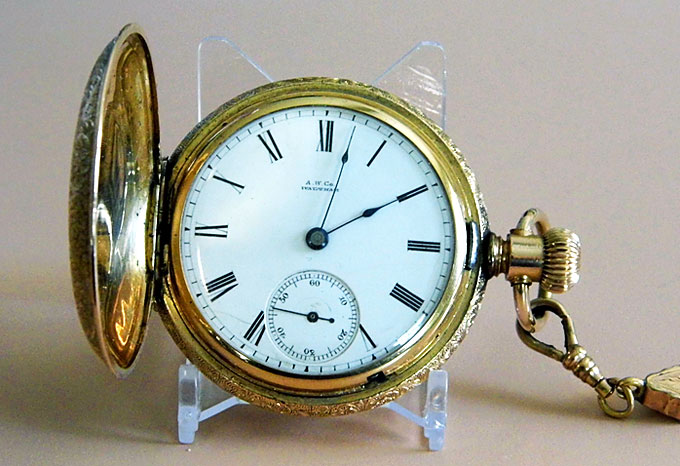
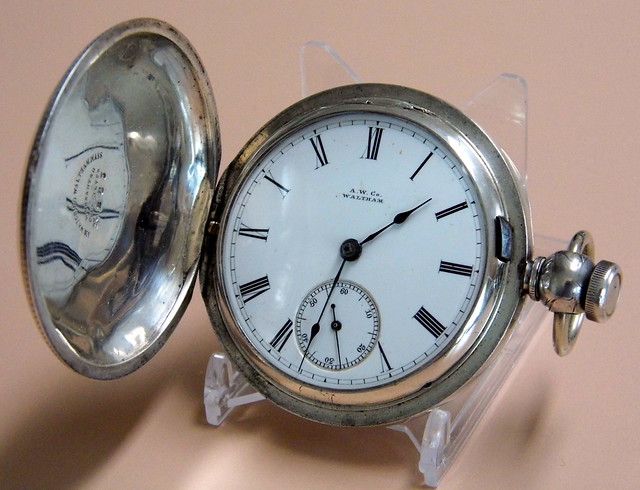
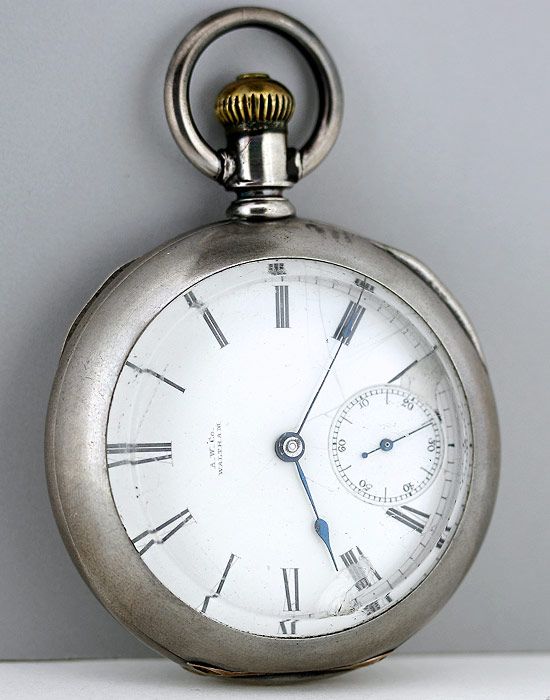
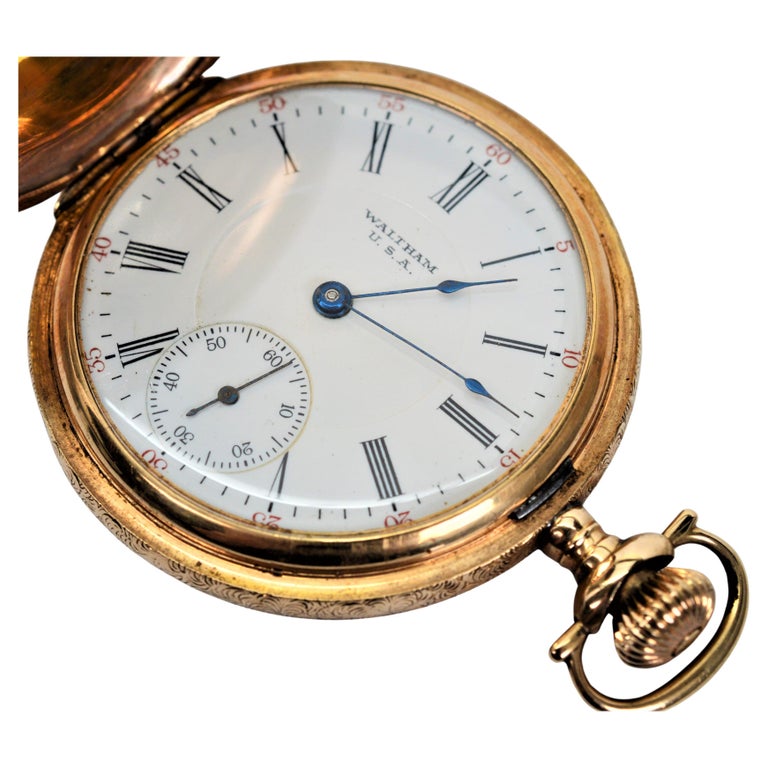
Waltham Watch Company

February 10, 2023 by aabbady Leave a Comment

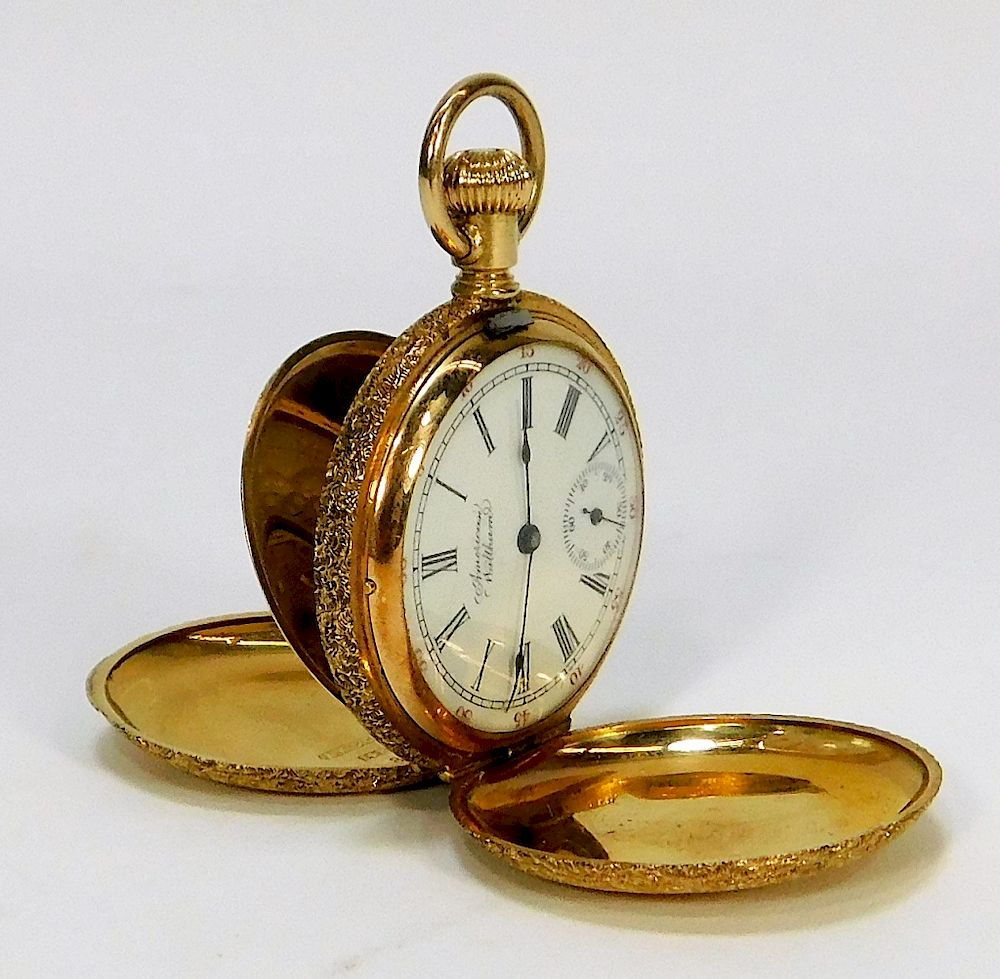
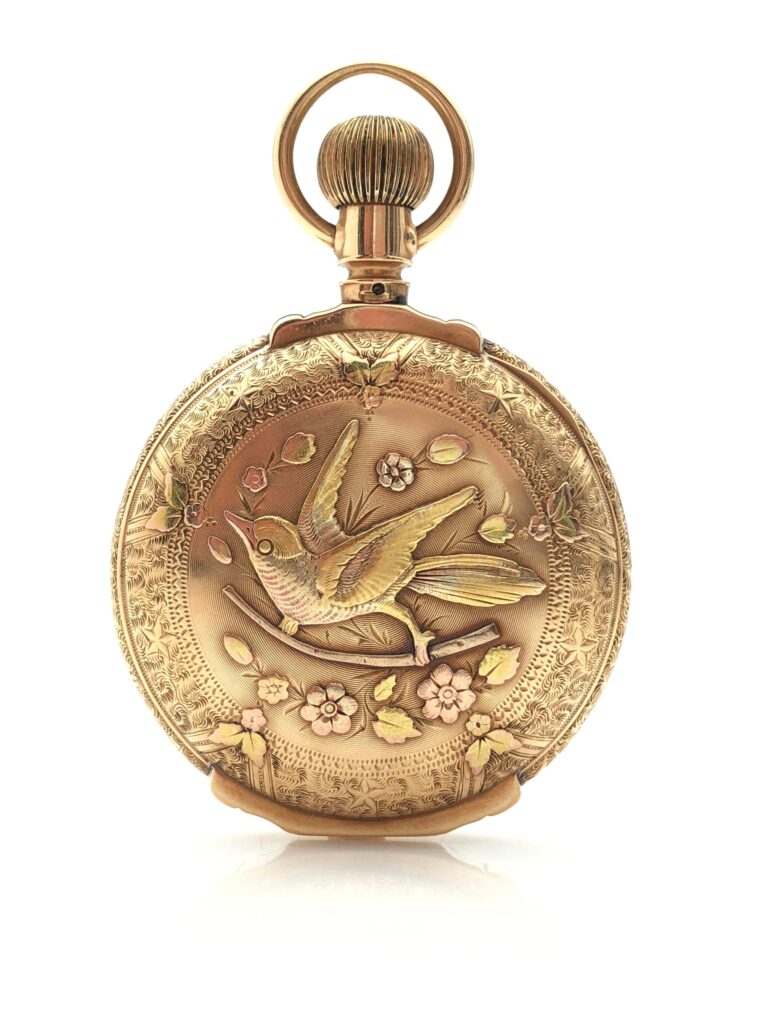
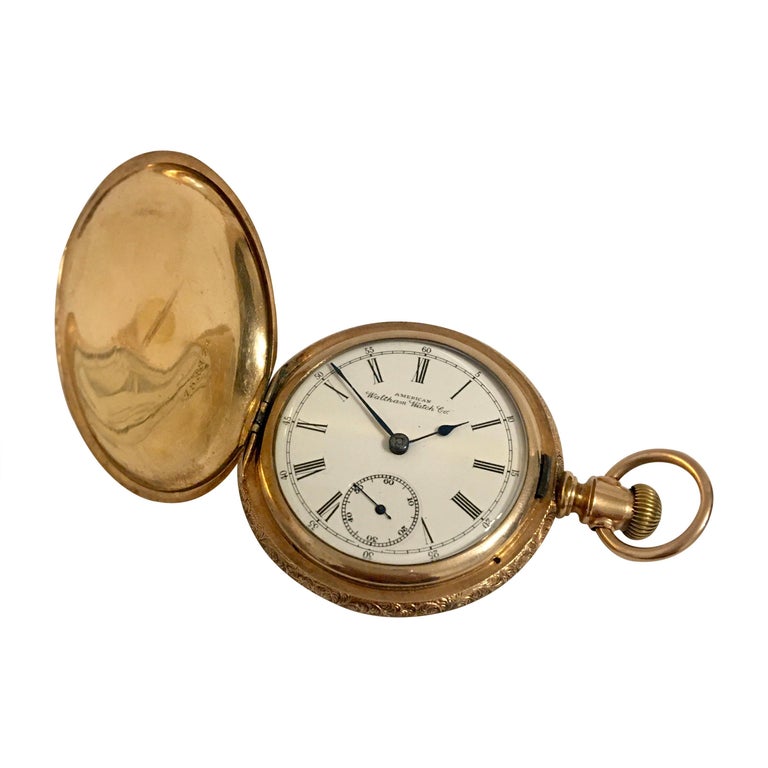
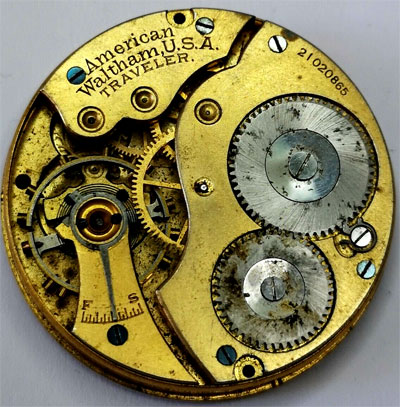
American Waltham was the first American Watch Co. They are the pioneered almost in all of the early developments in watches and watch making in the United States. Elgin was an early spin off from Waltham and eventually overtook Waltham in total production. For essentially all the period of 19th Century American Watchmaking, Waltham and Elgin had cooperative agreements intended to prevent other companies from competing with them. The first of these covered the patent center pinion. Later cooperative arrangements included stem winding and pendant setting arrangements.

In 1850 at Roxbury in Massachusetts, David Davis, Edward Howard and Aaron Lufkin Dennison formed together the company that would later become the Waltham Watch Company. The business plan was to manufacture the movement parts so precisely that they would become fully interchangeable. Based upon the experience of earlier failed trials, Howard and Dennison would eventually perfect and patent their precision watch making machines and create the American System of Watch Manufacturing.

Their vision was to form a watch company that could produce high-quality watches at a lower cost using interchangeable parts. With financial backing from Samuel Curtis, the first watches were made in 1850, but problems were encountered. They were exploring new ideas in watch manufacturing, such as using jewels, making dials, and producing plates with a high-level of finish which required extensive tooling and resulted in great financial burden on the company. They also found that even though they were using interchangeable parts, each watch was still unique and had its own set of errors to be corrected. It took months to adjust the watches to the point where they were any better than other widely available timepieces.

The 1883 model full plate watch was followed by Waltham’s 1892 model, which was the last of the Waltham 18 size designs. Although a larger watch, it incorporated many of the design elements of the earlier 16 size watches. Waltham also continued to develop the successful 16 size lines with the innovative 1888 model and their very successful 1899/1908 model.

Also commonly referred to as the “Waltham Watch Company,” the American Waltham Watch Company was the first watch company to mass produce watches in America and is generally considered to be the most important American watch company.

The name was changed to “Boston Watch Company” in 1853.  In 1854 a factory was built in Waltham Mass.  The watches that were made were named “Dennison, Howard, & Davis” as earlier stated, as well as “P.S.Batrlett”,  and “C.T. Parker”.  Boston Watch Company failed in 1857.

The company was sold at auction to Appleton Tracy & Co in May 1857.  In January 1859 the Waltham Improvement Company and Appleton, Tracy & Company merged to the American Waltham Watch Company.  By 1860 the country was in Civil War, and the company was in trouble again.  Production ground to a halt.  With a war going on, finding a market for their watches was becoming a seroius problem.  The company decided to downsize to the lowest possible level to keep the factory open.  It worked!

In 100 years of existence the factory produced 40 million jeweled watches, plus clocks, speedometers, compasses, time fuses for bombs and other precision instruments.

Waltham Watch company went out of business in the late 1950”s-early 1960’s,  in 1957 they planned to merge into Waltham Precision Instrument Company which was completed March 1960.  The shareholders of the old company received shares of  the Waltham Precision Instrument Company and also received shares in a Waltham Watch Company.    In the mid 60’s the remaining assets were purchased by the Dextra Corporation which failed in 1983.

History

Waltham  S/N by through the yrears.

1852 – 501874 – 730,0001896 – 7,450,0001918 – 21,800,0001940 – 30,250,000
1853 – 4001875 – 810,0001897 – 8,100,0001919 – 22,500,0001941 – 30,750,000
1854 – 1,0001876 – 910,0001898 – 8,400,0001920 – 23,400,0001942 – 31,050,000
1855 – 2,5001877 – 1,000,0001899 – 9,000,0001921 – 23,900,0001943 – 31,700,000
1856 – 4,0001878 – 1,150,0001900 – 9,500,0001922 – 24,100,0001944 – 32,100,000
1857 – 6,0001879 – 1,350,0001901 – 10,200,0001923 – 24,300,0001945 – 32,100,000
1858 – 10,0001880 – 1,500,0001902 – 11,100,0001924 – 24,550,0001946 – 32,350,000
1859 – 15,0001881 – 1,670,0001903 – 12,100,0001925 – 24,800,0001947 – 32,750,000
1860 – 20,0001882 – 1,835,0001904 – 13,500,0001926 – 25,200,0001948 – 33,100,000
1861 – 30,0001883 – 2,000,0001905 – 14,300,0001927 – 26,100,0001949 – 33,500,000
1862 – 45,0001884 – 2,350,0001906 – 14,700,0001928 – 26,400,0001950 – 33,560,000
1863 – 65,0001885 – 2,650,0001907 – 15,500,0001929 – 26,900,0001951 – 33,600,000
1864 – 110,0001886 – 3,000,0001908 – 16,400,0001930 – 27,100,0001952 – 33,700,000
1865 – 180,0001887 – 3,400,0001909 – 17,600,0001931 – 27,300,0001953 – 33,800,000
1866 – 260,0001888 – 3,800,0001910 – 17,900,0001932 – 27,550,0001954 – 34,100,000
1867 – 330,0001889 – 4,200,0001911 – 18,100,0001933 – 27,750,0001955 – 34,450,000
1868 – 410,0001890 – 4,700,0001912 – 18,200,0001934 – 28,100,0001956 – 34,700,000
1869 – 460,0001891 – 5,200,0001913 – 18,900,0001935 – 28,600,0001957 – 35,000,000
1870 – 500,0001892 – 5,800,0001914 – 19,500,0001936 – 29,100,000 
1871 – 540,0001893 – 6,300,0001915 – 20,000,0001937 – 29,400,000 
1872 – 590,0001894 – 6,700,0001916 – 20,500,0001938 – 29,750,000 
1873 – 680,0001895 – 7,100,0001917 – 20,900,000


1939 – 30,050,00 

Please remember that this is an unofficial account of the history of this company, Should you happen to find any mistakes with our information then please let us know at

Email Us

Filed Under: Luxury Timepieces Tagged With: American Waltham, luxury pieces, Luxury Timepieces, Old watches, Timepieces., Vintage watches, watches, watches history

Alpina Genève – innovation luxury watches

February 9, 2023 by aabbady Leave a Comment

Alpina Genève luxury watches

Alpina Genève is a Swiss manufacturer of accessible luxury watches and is an independent company based in Geneva, Switzerland. Founded in 1883, we continue to develop highly distinctive and attractive collections with a real sporting pedigree.

WHY ALPINA

The company is involved in all the stages of the production, from initial design through to final assembly. Each watch is assembled by hand and we have invested heavily in state-of-the-art digital machinery for maximum quality. Which means that what you put on your wrist is a genuine luxury product but not at a luxury price.

Each Alpina watch shares a common core, whether it is the limited edition Tourbillons or the Ladies Extreme Regulator Ceramic – they are made to be worn by you whatever you do and wherever you are.

But an Alpina watch is more than that. It is about tradition and heritage, about using age old traditions to make a precious mechanical time piece but bringing in modern technology to guarantee an even higher quality product. It is about knowing that we have been making watches non-stop since 1883.

It is about letting our ambassadors take the watches into the world and use them. It is about listening and bringing to you their ideas and improvements. It is about providing a watch that is good to be seen with and good to use.

It is about taking part in your life.

It is about being a player.

From Alpina company website.

https://alpinawatches.com/

OUR STORY SINCE 1883

Right from the very beginning Alpina has been associated with innovation, and our beginning goes as far back as 1883. Whether it was an innovative way of working or introducing quality criteria to adhere to before anyone else, Alpina has always been looking for ways to improve. This is still true today, where we make great watches to the most exacting standards of haute horology, offering extraordinary value for money.

The story of Alpina starts at the end of the 19th Century when Gottlieb Hauser founded the Swiss Watchmakers Corporation with other independent watchmakers of the region. Initially it was to purchase watch components and to organise the manufacturing but Alpina soon started developing and making our own calibres. In 1901, the name ‘Alpina’ was registered and appeared for the first time, but only on high end watches.

Very soon Alpina was being sold internationally and at our height had nearly 2000 outlets all over the world selling our watches, an exceptional figure for those days. It is no exaggeration to say that Alpina was one of Europe’s leading watchmakers.

Part of the reason for this success, other than the rigorous dedication to design and quality, (values that still hold true today), was the introduction in 1938 of the Alpina 4. The number ‘4’ stood for the 4 core principles that each watch in the series had to have: anti-magnetism, water-resistance, anti-shock and in a stainless steel case.

These principles gave a theme to the watches and can be said to have pointed the way to the development of what was to be the continued success of the company up until the 1970s. It was the so-called ‘Quartz Crisis’ that either sounded the death knell for many companies or meant the creation of major groups.

The emergence of cheap, mass-produced and, above-all, impersonal, watches also nearly meant the end for Alpina. However, despite everything, Alpina hang tough and was revitalized in 2002 and the comeback was on. Working round the clock, a new collection was made ready for the BaselWorld show in 2003, where the models, whilst remaining true to the heritage of Alpina, were, never-the-less, resolutely modern. In 2006, Alpina made one more move in its journey towards the future when we moved to our new, purpose built manufacturing site in Geneva, Switzerland, one of the spiritual homes of watch making.

There are still core elements of the original philosophy that remain:

A dedication to innovation.

A commitment to producing the best watches at the best prices.

A promise to respect the true beneficiary of an Alpina watch, the customer.

A dedication to quality.

And our independence – because we are still independent after all this time.

And like the Alpina 4 there are 4 new guiding principles at the heart of very new watch we design:

• Bold designs

• Iconic looks

• Premium materials with black and red finishing and

• Every watch, without, exception is water-resistant to at least 10 ATM, (with the Diver Extreme going even further being tested and guaranteed to 100 ATM!)

Today, like yesterday, each watch is still assembled in Switzerland by hand by a team of skilled craftsmen and women. However, in our state of the art plant we use only the most modern precision tools to extensively check and control every watch that leaves our Manufacture to offer you the guarantee of maximum quality and durability.

Alpina is once again available all over the world. Fans, collectors and aficionados alike can find their favourite time pieces in over 300 (and growing) selected high end watch retailers throughout the world; (for a full list of where to buy your next Alpina watch, see our website www.alpina-watches.com).

If you are wanting the joy of owning a luxury Swiss-made wrist watch, that adheres to the traditions of great watch-making yet is definitely modern, (and you don’t want to pay a fortune for the privilege), then owing an Alpina Genève watch is your readymade solution.

https://alpinawatches.com/

Please remember that this is an unofficial account of the history of this company, Should you happen to find any mistakes with our information then please let us know at

Email Us

Filed Under: Luxury Timepieces Tagged With: Alpina Genève luxury watches, luxury pieces, Luxury Timepieces, Old watches, Timepieces., Vintage watches, watches, watches history

Accurist-first watch to promote the 21 JEWEL lever-movement

February 9, 2023 by aabbady Leave a Comment

Accurist watch

In 1946, working from premises in St John Street in London’s Clerkenwell district. Asher and Rebecca Loftus established Accurist with the intention of creating a brand name of lasting value. Like much of the competition at that time, Accurist watches were made entirely from Swiss components. A positive sales point that guaranteed quality, and which coupled with competitive pricing helped establish our reputation for value.

Accurist became the first watch company to actively promote the 21 JEWEL lever-movement. Accurist 21 JEWELS became the Company Slogan setting a standard in watches that was later to be followed by many of our competitors. In an effort to increase market share and to position Accurist as a national brand in a somewhat conservative market place. Accurist broke out of the traditional watch advertising mould by producing a T.V. Campaign which was aired regularly on “Sunday Night at the London Palladium”. Probably the most widely viewed television program of its day.

However, a watch was still seen to be a ‘once in a lifetime’ purchase – Accurist set out to change this by introducing fashion into watches. Richard Loftus, fresh out of University, created a range of watches that was to revolutionise the watch market worldwide. Soon Accurist’s Old England watches were seen on the wrists of the famous and fashionable: – Princess Anne, The Beatles and Twiggy were amongst the millions worldwide who wore the large brightly coloured watches that became synonymous with the mini skirt, Carnaby Street and London of the swinging 60’s.

As the sixties developed, so did Accurist and in 1968 a Swiss office, Accurist S.A. was opened in La Chaux de Fonds, the heart of the Swiss watch making industry, to co-ordinate the manufacturing and sourcing for the company.

The’70’s saw the introduction of the digital quartz movement and as the technology developed from L.E.D to L.C. D it was Accurist’s digital quartz watch which was chosen as the official watch for the pilots of the newly launched Concorde aircraft. Brand awareness remained an important factor in the success of the Accurist product range and 1978 saw the launch of one of the Television’s most memorable campaigns; John Cleese featuring the “Accur-ankle, Accu-wrist!” commercial. The commercial went on to win awards around the world including the Palm d’Or Advertising Award. It was even featured on the USA’s Johnny Carson show as one of the world’s ten best adverts!

In 1983 after two years of careful research and planning, Andrew Loftus applying all the principles on which his parents had established the business, switched the manufacturing base from Switzerland to Japan and in the following three years Accurist’s UK business increased by over 500%.

Flushed with the success of the new collection, Accurist achieved a major marketing breakthough by being appointed as the first ever, official sponsor of British Telecom’s Speaking Clock. Since the original sponsorship agreement in 1986 Accurist’s speaking clock has received the incredible number of almost 3 billion calls. Making this the “greatest sponsorship deal of all time”. Accurist continued to maximise on its association with the Speaking Clock, developing a new advertising and marketing campaign with the slogan “Accurist – the standard by which all watches are set”. In 1987 Accurist were awarded The National Association of Goldsmiths first ever Award of Excellence in recognition of their contribution and influence in the UK watch market.

In 1993 Accurist had become the UK’s largest brand in value terms and now set its sights on the international market. Again it was creative and opportunist marketing that would provide the platform for its most ambitious project to date. The Royal Observatory at Greenwich, home of Greenwich Mean Time and The International Meridian Line was undergoing major renovation. Accurist seized on this opportunity and became the first and only Watch Company to be formally associated with the Observatory, providing them with the new Atomic Clock, which officially records the time for the world. In 1995 to celebrate this association with Greenwich Mean Time, The “Greenwich Commemorative collection”, was launched in over 20 countries.

In April 1997 Accurist started the official countdown to the Millennium by providing the Old Royal Observatory at Greenwich with a Satellite controlled clock accurate to within 1/10,000,000th of a second to countdown the last 1000 days of the 20th century. In 1884 at the International conference in Washington the meridian line at Greenwich was chosen as the “meridian line for the world” 0 degrees longitude and it was decreed that the universal day for the world starts at midnight on the meridian line.

Later in 1997 Accurist moved its Headquarters’ to its current location in London’s West Hampstead district The custom built facilities have created a modern and efficient infrastructure from where Accurist can uniquely provide an efficient and co-ordinated service across every facet of its business from product design, and distribution, to after sales service and product assembly.

In July 1997 Accurist won “Volume watch brand of the year” at The UK Jewellery Awards.

1999 saw the launch of Accurist’s youth orientated accu.2 range, backed by a high impact advertising campaign “no ordinary old timer” success was instantaneous and the collection is sold in over 1500 outlets across the UK. Innovative product design and strong advertising campaigns (including “sec’s machine” and “two-timer”) have insured that accu.2 has remained at the forefront of fashion watches.

January 1st 2000 saw the Accurist name emblazoned across television screens and newspapers world-wide as camera’s from across the globe focussed on the meridian line and on it the prominently placed Accurist millennium countdown clock at Greenwich, to usher in the new millennium.

In 2001 Accurist’s commitment and dedication to service was acknowledged by the trade in general as Accurist became the only watch company to have been awarded the most prestigious “Customer Service Award ” at The UK jewellery awards ceremony.

March 2003 has seen Accurist further strengthen their original agreement to support the Old Royal Observatory at Greenwich by signing an exclusive license with the National Maritime Museum to produce a range of replica clocks and watches from the Observatory’s and Museum’s historic collections.

In September 2005 to capitalise on their expertise in the UK market Accurist set up a new division to distribute other brands in the UK. 2006 saw Accurist become the first brand to be co-featured in the English football team‘s advertising campaign. From Jan 1st 2007 Accurist started distributing Versace watches and Jewellery.

In 2008 Accurist launched ‘British Real Time’ with faces and voices from across the United Kingdom. Accurist’s research shows that our relationship to time and how we access it has changed. We focus more on what we do with our time rather than being dictated to by the constraints of time. British Real Time.com is a celebration of British culture and what contemporary Britain is doing at any given moment, giving a snapshot of Britain today.

The past 60 years tell a remarkable story of the development of one of the industry’s most famous independent watch companies. With a young and dynamic management team committed to the companies original principles, the future promises to be just as exciting.

From Accurist Website.

https://www.accurist.com/

Please remember that this is an unofficial account of the history of this company, Should you happen to find any mistakes with our information then please let us know at

Email Us

Filed Under: Luxury Timepieces Tagged With: Ancre, luxury pieces, Luxury Timepieces, Old watches, Timepieces., Vintage watches, watches, watches history

the Ancre watch – mechanical detail of watch movement

February 9, 2023 by aabbady Leave a Comment

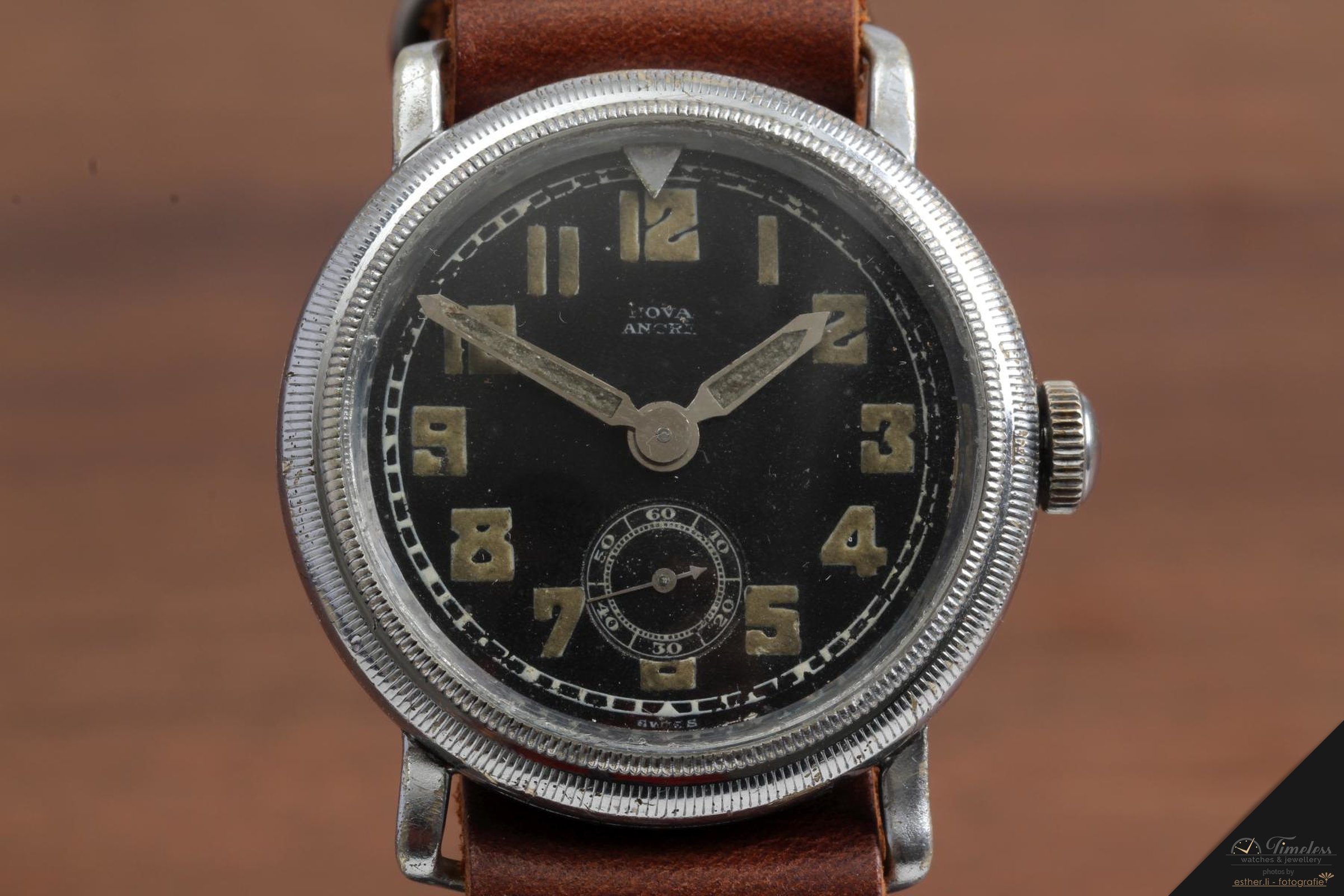
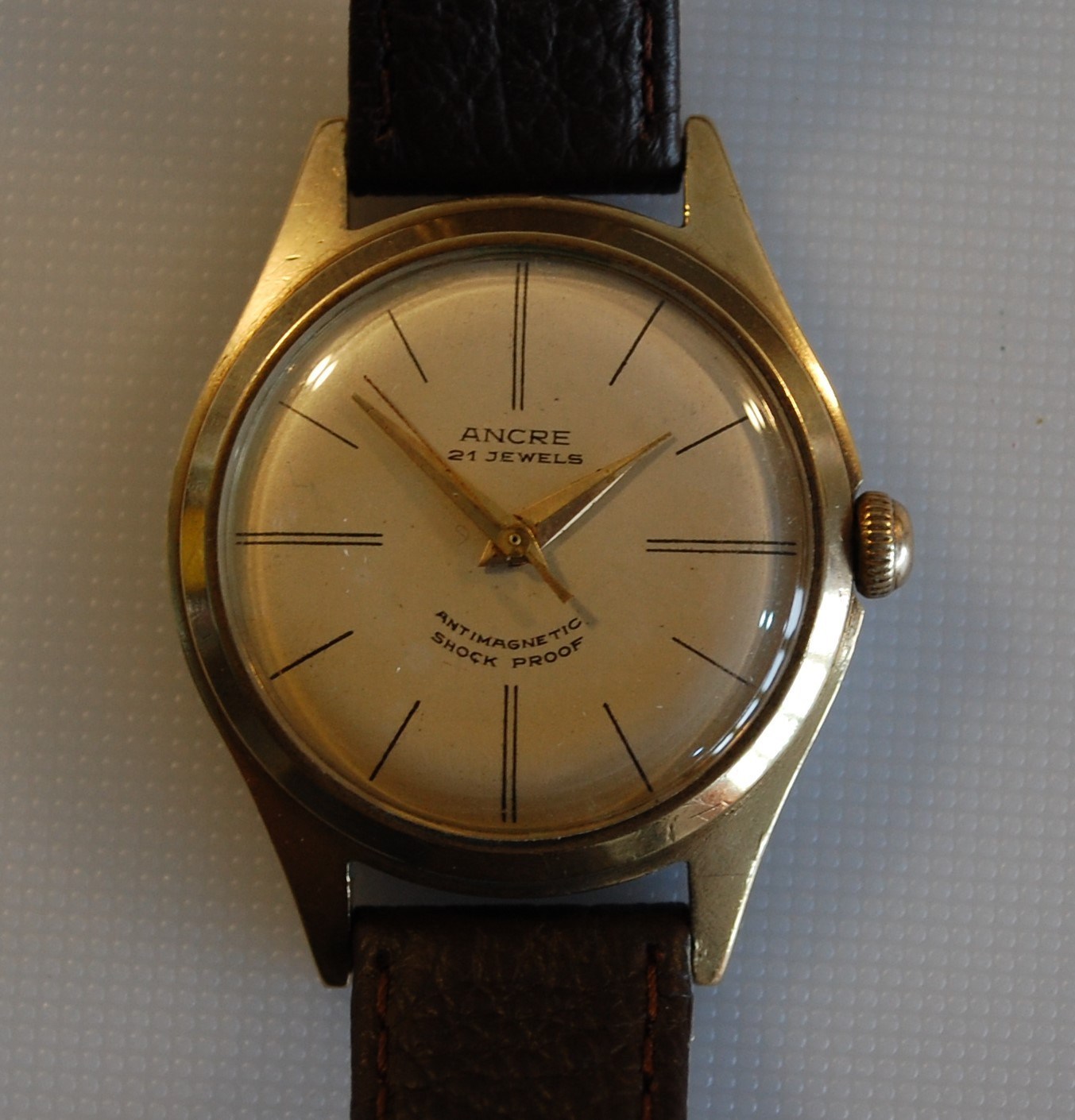
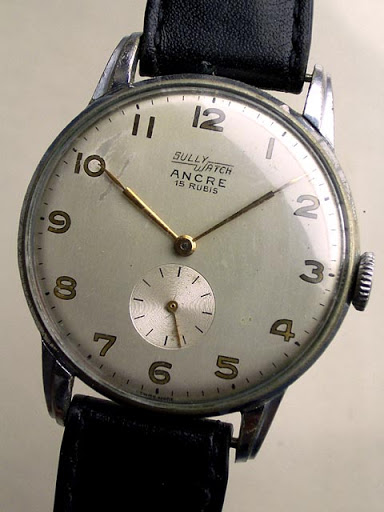
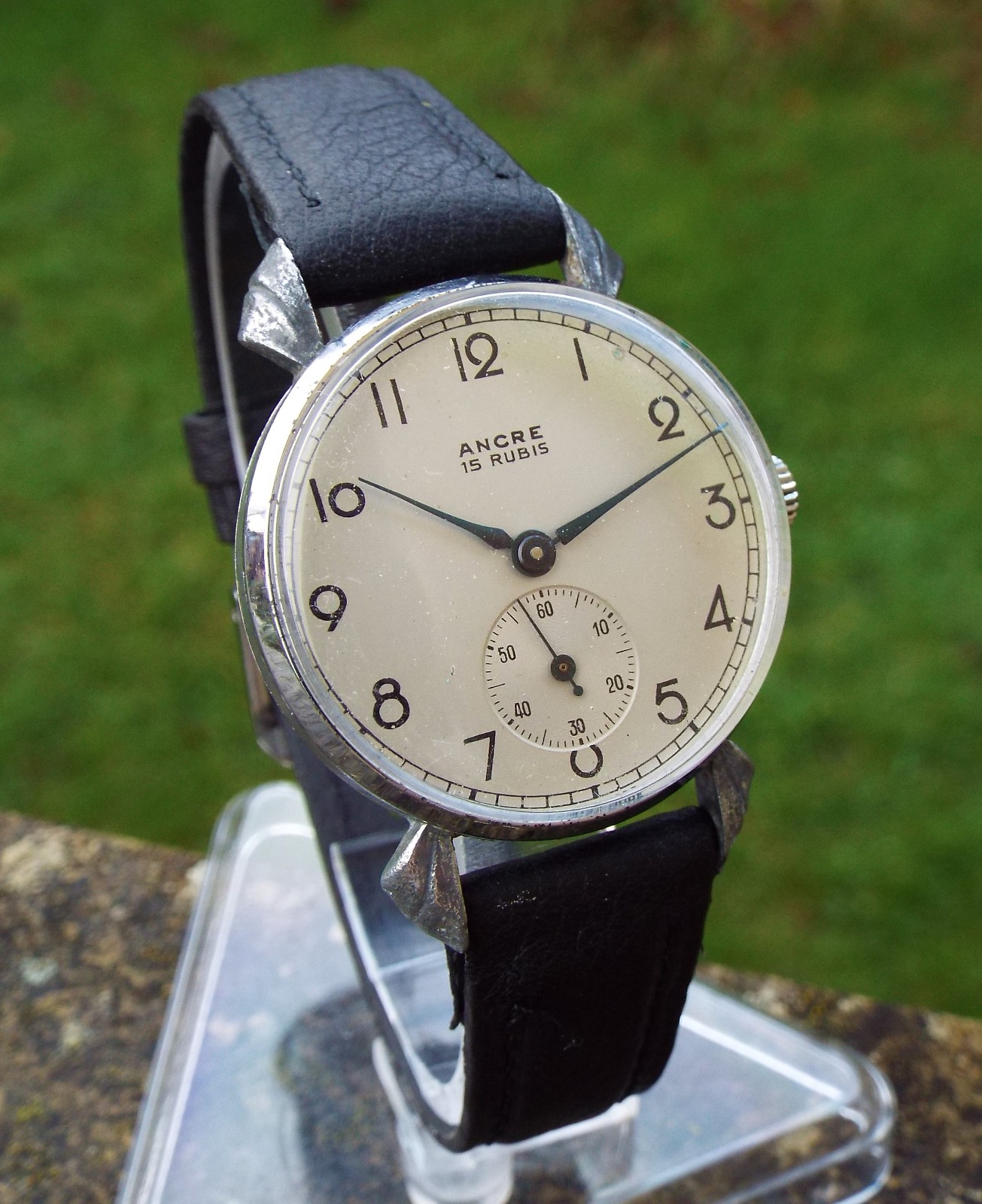
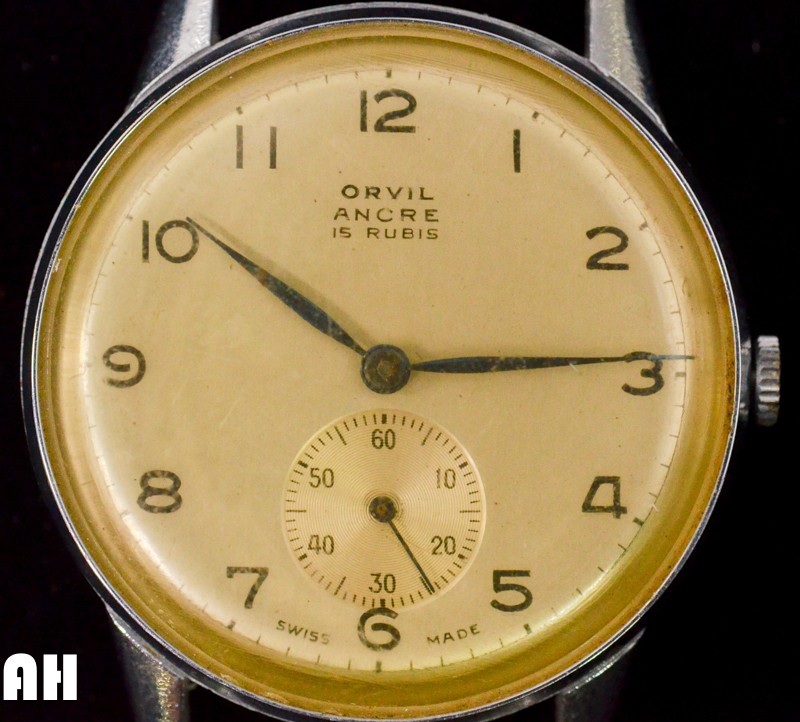
Ancre is not a manufacturer or retailer name. It is simply a French word which refers to a mechanical detail about the watch movement, that it is equipped with a lever escapement. Levees Visible also refers to a mechanical detail, that being the escapement bridges are arranged in such a way that you could see the lever. These details were important to customers in the early era of mass-produced watches, and are commonly seen engraved on the cases of Swiss watches produced from the 1870s through the 1920s.

the Ancre watch is nevertheless of historical interest and therefore collectable. I think the watch was made in Switzerland for (obviously) the German market. The reason I say Swiss is because of the French language inscription ( which means “anchor escapement, visible levers”) and the regulator which is marked both in French “R A” and English “S F”. A French-made watch would not have had the English “S F”, and a German-made watch of that era would of course have had everything written in German. UDC is probably the owner’s initials.

The guess is that the watch may have been made for the Krupp factory in Berlin as a gift for retiring employees or something of that nature. The quality of the movement itself looks to be fairly basic.

Please remember that this is an unofficial account of the history of this company, Should you happen to find any mistakes with our information then please let us know at

Email Us

Filed Under: Luxury Timepieces Tagged With: Ancre, luxury pieces, Luxury Timepieces, Old watches, Timepieces., Vintage watches, watches, watches history

  • « Go to Previous Page
  • Page 1
  • Page 2
  • Page 3

Primary Sidebar

Recent Posts

  • What do you know about Seiko Watch
  • All you need to know about TAG Heur watch
  • All you need to know about Timex watch
  • All you need to know about The Victorinox Swiss Army watch
  • All you need to know about Zenith watch

Recent Comments

Archives

  • December 2025
  • February 2025
  • March 2023
  • February 2023

Categories

  • about Zenith watch
  • Luxury Timepieces
  • Seiko Watch
  • TAG Heur watch
  • The Victorinox Swiss Army watch
  • Timex watch
  • Uncategorized

Copyright © 2026 · watchcue.com