• Skip to primary navigation
  • Skip to main content
  • Skip to primary sidebar

The History Of Watches

All you need to know about Luxury Timepieces

  • The Greatest Watch Heist – The return of The Brequet Queen
  • About Us
  • Contact Us
  • How you can choose the right watch
  • Japanese Watch History
  • The American Watch History
  • The Evolution of Watches: Tracking Time Across the Ages
  • The Greatest Watch Heist – The return of The Brequet Queen
  • Timekeeping in an ancient Egyptian temple
  • Watch Brand List
  • Watch Glossary
  • Watches Blog
  • The Greatest Watch Heist – The return of The Brequet Queen
  • About Us
  • Contact Us
  • How you can choose the right watch
  • Japanese Watch History
  • The American Watch History
  • The Evolution of Watches: Tracking Time Across the Ages
  • The Greatest Watch Heist – The return of The Brequet Queen
  • Timekeeping in an ancient Egyptian temple
  • Watch Brand List
  • Watch Glossary
  • Watches Blog

World The Most Expensive Watches

Gallet History Time Line

February 25, 2023 by aabbady Leave a Comment

Gallet History Time Line


1466


Humbertus Gallet, living and working in Geneva, becomes a
citizen of the republic on the 18th of April. Historical references point to
his profession as a horloger or clock maker.


1685


Due to the abolishment by French King Louis XIV of the
tolerance agreement of Nantes, additional members of the Bourg-en-Bresse Gallet
family, whose professions are documented as goldsmiths and watchmakers, join
their relatives in Geneva to live and practice their trade.

1702 – Philippe Gallet ((1679–1739), son of Jacques Gallet
(1649–1700) and Marie Bouvier Gallet, is included in the Geneva Registry of
Jewelers and Watchmakers.
Gallet History watches history


1742


Pierre Gallet (1712–1768) marries noblewoman Jeanne Renée de
Rabours. The marriage contract records Pierre Gallet’s profession as master
goldsmith. This document also lists the occupation of Pierre’s father, Philippe
Gallet (1679–1739), as goldsmith and watchmaker.


1744


Jeanne Renee gives birth to a son, Jacques, who follows in
his father’s occupation as jeweler and watchmaker.
Gallet History watches history


1774


Jacques Gallet (1745–1806) fathers a son, Jean-Louis Gallet
(1774–1809).


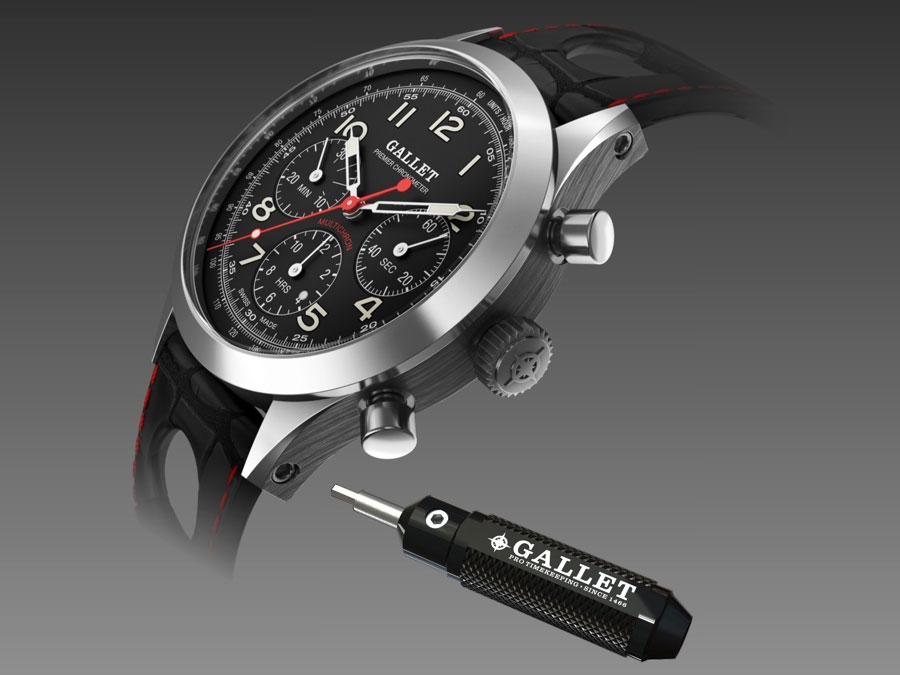
1804


Napoleon annexes Geneva, naming it the Lemanique Republic.
Jean Louis Gallet becomes a French citizen and continues his father’s jewelry
and watch making company until his pre-mature death in 1809 at age 35.
Gallet History watches history


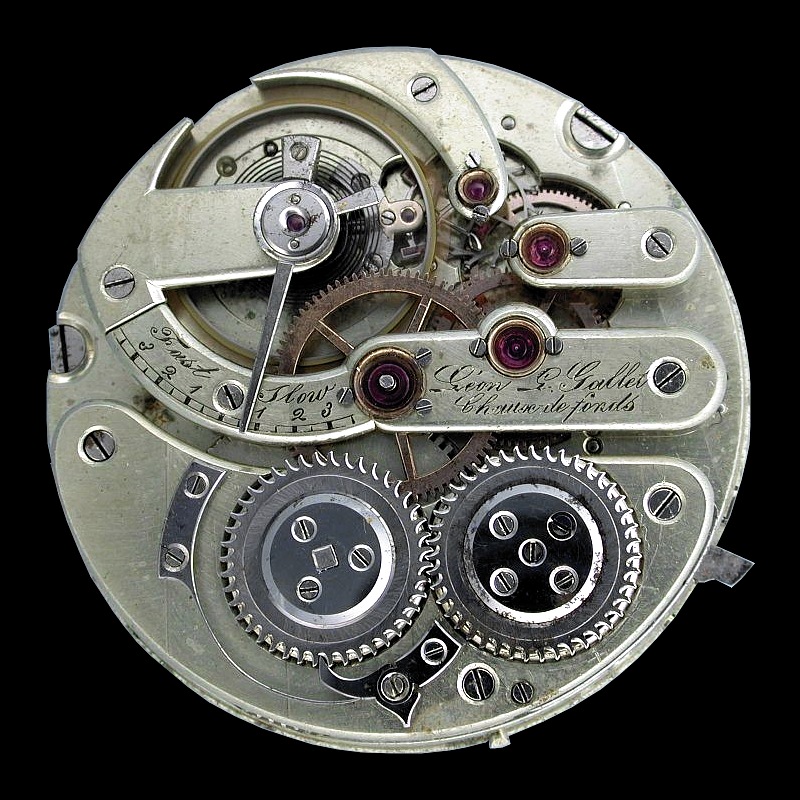
1826


Julien Gallet (1806–1849), son of Jean Louis, relocates the
family watch making business to La Chaux-de-Fonds, a major center for pocket
watch production. At this time, the company is officially registered as Gallet
& Cie (Gallet & Company), a break from the tradition of naming the
business after the family patriarch.
Gallet History watches history

1848


Julien Gallet dies at 43, after which, the company is run by
his widow Louise, and

sons Leon and Lucien.


1855


Léon Gallet (1832–1899) becomes the patriarchal figure of
the rapidly growing Gallet & Cie. He expedites the expansion of the company
and the need for more workshop space by acquiring Grumbach & Co., which
produces watches with the brand name Electa. Gallet & Cie. is renamed
Electa Gallet & Cie. and produces watches under both the Gallet and Electa
brand names.
Gallet History watches history


1864


Léon Gallet’s brother Lucien Gallet establishes the
company’s first US location in Chicago, with a New York City office following
soon after. Together with Jules Racine, a cousin of the Gallet brothers living
in the US, the company expands its distribution to the American market.


1876


In response to competition for sales of timepieces in Europe
by large American watch manufacturer’s, Léon Gallet, together with Louis and
Jules Courvoisier, Ernest Francillon of Longines, and Constant Girard-Gallet of
Girard-Perregaux, found the “Intercantonal Company for Industrial Development
of the Jura Industries”. Benefiting from the unified strength of combined
Swiss manufacturing resources, the group is able to maintain its sales
dominance in Europe. Marketing for the syndicate is primarily European based
with an emphasis on sales to England.
Gallet History watches history


1880


Henriette Gallet (1860-1939), daughter of Léon Gallet, is
wed to Émile Courvoisier (1858-1937), son of Louis Courvoisier (1825-1885), at
which time the working relationship between these two important La
Chaux-de-Fonds watch manufacturers becomes familial.


1881


Léon L. Gallet commissions and trademarks the Gallet Lyre
Mark. The Lyre Mark is stamped on watch cases and movements manufactured in the
La Chaux-de-Fonds workshop.
Gallet History watches history


1882


A strategic partnership is formed with Jules Jeanneret &
Fils, to supply mechanisms for Gallet’s professional use line of hand-held
timers and pocket chronographs.


1883


Léon hands over management of the Gallet company to his
older son Julien (1862–1934), but continues to remain involved until his 1899
death in New York. The JG initials are added to the Gallet Lyre Mark and the
company name is temporarily changed to Julien Gallet & Cie to reflect the
older son’s control of the business. Georges Gallet (1865–1946), Léon’s younger
son, assists his brother with the management of the company while working
part-time at Courvoisier & Frères. By this time, the Gallet Company is
producing more than 100,000 watches annually.
Gallet History Time Line

1466

Humbertus Gallet, living and working in Geneva, becomes a citizen of the republic on the 18th of April. Historical references point to his profession as a horloger or clock maker.

1685

Due to the abolishment by French King Louis XIV of the tolerance agreement of Nantes, additional members of the Bourg-en-Bresse Gallet family, whose professions are documented as goldsmiths and watchmakers, join their relatives in Geneva to live and practice their trade.
1702 - Philippe Gallet ((1679–1739), son of Jacques Gallet (1649–1700) and Marie Bouvier Gallet, is included in the Geneva Registry of Jewelers and Watchmakers.

1742

Pierre Gallet (1712–1768) marries noblewoman Jeanne Renée de Rabours. The marriage contract records Pierre Gallet's profession as master goldsmith. This document also lists the occupation of Pierre's father, Philippe Gallet (1679–1739), as goldsmith and watchmaker.

1744

Jeanne Renee gives birth to a son, Jacques, who follows in his father's occupation as jeweler and watchmaker.

1774

Jacques Gallet (1745–1806) fathers a son, Jean-Louis Gallet (1774–1809).

1804

Napoleon annexes Geneva, naming it the Lemanique Republic. Jean Louis Gallet becomes a French citizen and continues his father's jewelry and watch making company until his pre-mature death in 1809 at age 35.

1826

Julien Gallet (1806–1849), son of Jean Louis, relocates the family watch making business to La Chaux-de-Fonds, a major center for pocket watch production. At this time, the company is officially registered as Gallet & Cie (Gallet & Company), a break from the tradition of naming the business after the family patriarch.

1848

Julien Gallet dies at 43, after which, the company is run by his widow Louise, and 
sons Leon and Lucien.

1855

Léon Gallet (1832–1899) becomes the patriarchal figure of the rapidly growing Gallet & Cie. He expedites the expansion of the company and the need for more workshop space by acquiring Grumbach & Co., which produces watches with the brand name Electa. Gallet & Cie. is renamed Electa Gallet & Cie. and produces watches under both the Gallet and Electa brand names.

1864

Léon Gallet's brother Lucien Gallet establishes the company's first US location in Chicago, with a New York City office following soon after. Together with Jules Racine, a cousin of the Gallet brothers living in the US, the company expands its distribution to the American market.

1876 

In response to competition for sales of timepieces in Europe by large American watch manufacturer's, Léon Gallet, together with Louis and Jules Courvoisier, Ernest Francillon of Longines, and Constant Girard-Gallet of Girard-Perregaux, found the "Intercantonal Company for Industrial Development of the Jura Industries". Benefiting from the unified strength of combined Swiss manufacturing resources, the group is able to maintain its sales dominance in Europe. Marketing for the syndicate is primarily European based with an emphasis on sales to England.

1880

Henriette Gallet (1860-1939), daughter of Léon Gallet, is wed to Émile Courvoisier (1858-1937), son of Louis Courvoisier (1825-1885), at which time the working relationship between these two important La Chaux-de-Fonds watch manufacturers becomes familial.

1881

Léon L. Gallet commissions and trademarks the Gallet Lyre Mark. The Lyre Mark is stamped on watch cases and movements manufactured in the La Chaux-de-Fonds workshop.

1882

A strategic partnership is formed with Jules Jeanneret & Fils, to supply mechanisms for Gallet’s professional use line of hand-held timers and pocket chronographs.

1883

Léon hands over management of the Gallet company to his older son Julien (1862–1934), but continues to remain involved until his 1899 death in New York. The JG initials are added to the Gallet Lyre Mark and the company name is temporarily changed to Julien Gallet & Cie to reflect the older son's control of the business. Georges Gallet (1865–1946), Léon's younger son, assists his brother with the management of the company while working part-time at Courvoisier & Frères. By this time, the Gallet Company is producing more than 100,000 watches annually.

1893

Berthe Courvoisier (1868-1936), daughter of Louis Philippe Courvoisier and an heir to the family watch company, is wed to Georges Gallet, son of Léon. Berthe Courvoisier and her brother Émile, together with Georges Gallet and his sister Henriette, continue to manage the Courvoisier Frères watch company. Georges Gallet assumes the role as co-director of the company.

1895

Gallet introduces the first wrist-worn watches for mass consumption by men and women to the American market. These first "wristwatches" are immediately rejected due to public perception as being too unusual for women and too feminine for men. All unsold examples are soon returned to Switzerland for disassembly. In spite of initial resistance to this groundbreaking innovation, wristwatches are issued during WWI as a more useful way for soldiers to tell time in combat situations. As a result, this new concept gains acceptance, and is soon added to the offerings of numerous other watch companies.

1896

Rail road pocket watches with chronometer grade movements with patented regulators are created by Gallet under the Interocean brand name and distributed by Timothy Eaton (T. Eaton Department Store) for railway use.

1896

Gallet wins a silver medal at the Swiss National Exhibition in Geneva.

1899

Upon his death, Léon Gallet bequeaths a sum of 43,000 Swiss Francs (today equivalent to approx. 1,000,000 US dollars) to the town of La Chaux-de-Fonds, of which 25,000 Swiss Francs is used for the construction of the Musée international d'horlogerie (International Museum of Watch Making). To assist the museum in building its initial collection of timepieces, Georges Gallet donates over 100 highly complex and valuable Gallet, Electa, and Courvoisier watches. Georges Gallet serves as director of the museum for the next twenty years.

1900

Shortly after Léon Gallet's death, the company name is changed back to Gallet & Cie (Gallet & Co.).

1905

Gallet wins a Diploma of Honor at the Liege Exhibition.

1906

The company name "Gallet & Cie, Fabrique d’horlogerie Electa" is registered to reinforce Gallet's ownership and control of the Electa brand. Under the Electa name, Gallet produces its highest quality timepieces.

1911

Henri Jeanneret-Brehm, a member of the esteemed Jeanneret family of St. Imier watchmakers, purchases the Magnenat-Lecoultre factory with financial assistance from the Gallet company.

1912

Gallet creates the first wristwatch for mass distribution to include a full-sized constant seconds hand originating from the center of the dial (face). This innovation proved useful for timing tasks that emphasized seconds over minutes and hours, including the measuring of the human heart rate. Gallet’s new “sweep second” wristwatches were issued to military nurses and medics during World War I.

1914

Gallet wins the Grand Prize in the Chronometer category at the Swiss National Exhibition in Berne.

1915

Gallet supplies hand held and cockpit mounted timers to the British Air Force during WW I.  Movements are produced in Gallet’s Electa workshop and marked with the Electa name.

1916

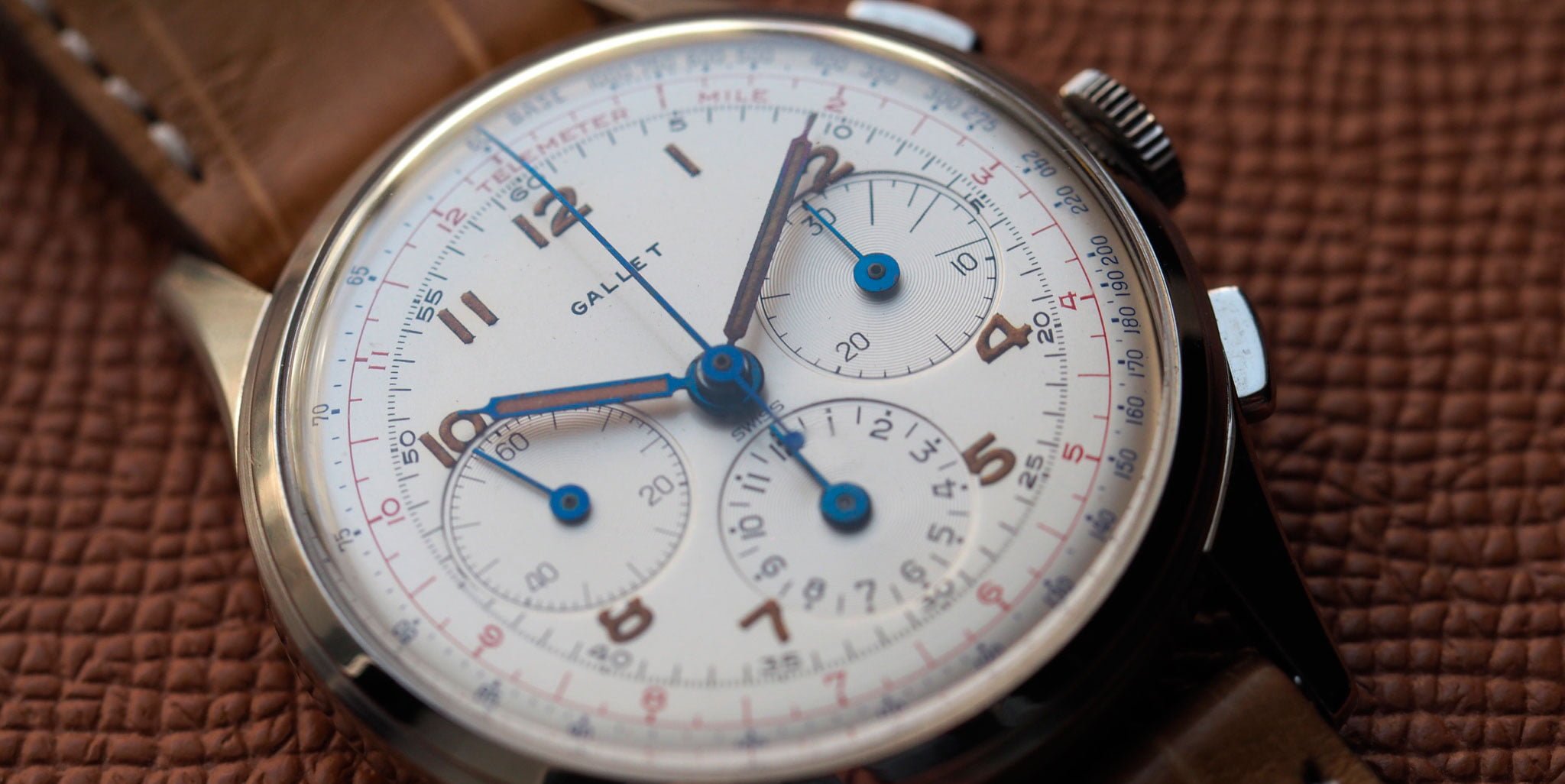
Gallet supplies wrist-worn timers to the British armed forces during World War I. This early chronograph wristwatch was an obvious transitional timepiece. While technically refined and reduced in size from a traditional hand-held timer, it still retains the three-piece case, porcelain enamel dial, and center button crown of its larger predecessor.

1917

Gallet wins the 1st place award for chronometer accuracy at the Canton Observatory in Neuchâtel.

1918

Jeanneret-Brehm begins manufacturing under the company name Excelsior Park. Deriving the name from Jenneret-Brehm’s previously registered “Excelsior” trademark, the English variation of the French word for “park” is utilized at the prompting of Gallet to support the collaborative efforts of the two companies in their marketing focus on the American consumer. The cooperative relationship of Excelsior Park and Gallet leads to the development of a number of time recording mechanisms, including the calibre 40. These new chronograph movements are utilized almost exclusively in Gallet and Excelsior Park wristwatches, with a small number supplied to the Girard Perregaux and Zenith companies when production capabilities allowed.

1927

Gallet introduces the “Regulator” and “Duo Dial” wristwatches for the medical and technical professions. The large-sized lower subsidiary seconds dial of the rectangular Duo-Dial and the predominant resetting sweep-second hand of the Regulator simplify the task of calculating a person’s per-minute heart rate.

1929

While Gallet develops viable markets for its new wristwatch innovations, the company is able to survive the Great Depression by supplying professional use “tool watches” to its military and industrial clients.

1935

As World War II becomes imminent, Gallet begins production of wristwatches, boat clocks with 8-day movements, and military stopwatches for Great Britain, Canada, and the U.S.A. At the start of World War II, production again surpasses 100,000 watches annually.


1936

Gallet introduces the first water resistant cases for protecting the delicate mechanism of chronograph wristwatches from the damaging effects of humidity. This new innovation become standard on many models in Gallet's "MultiChron" line of professional use timepieces, as well as the upcoming Flight Officer military issue pilot's watch.

1938

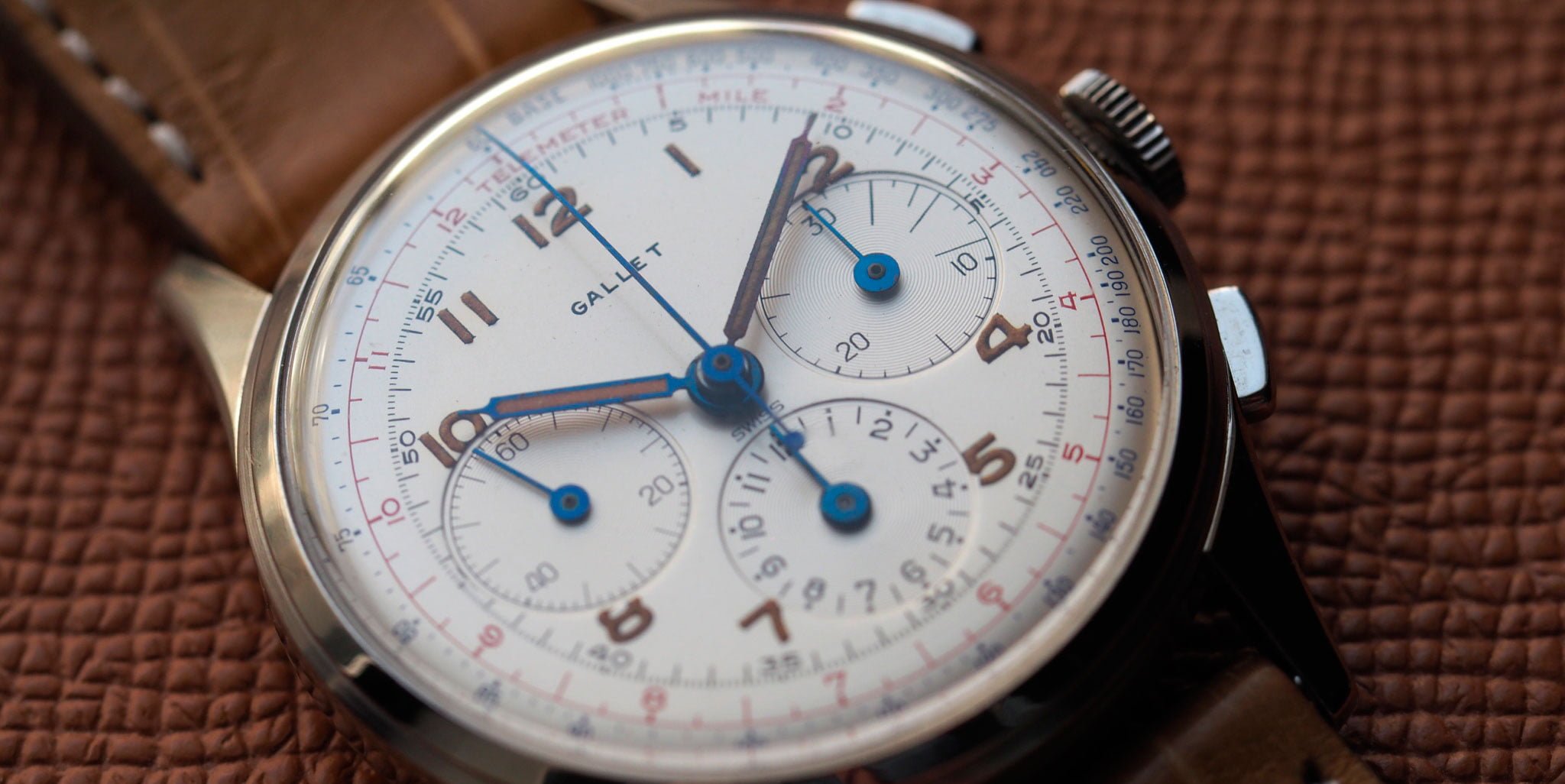
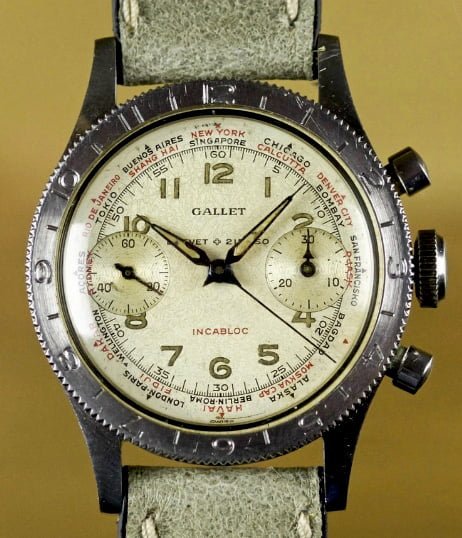
Commissioned by Senator Harry S Truman staff for the pilots of the U.S. Army Air Forces, Gallet creates the Flight Officer chronograph. This wristwatch provides a combination of new innovations. Besides the ability to accurately record events ranging from 1/5th second to 30 minutes in duration, the rotating 12-hour bezel and dial (face) printed with the major cities gives pilots the ability to calculate changes in the time as lines of longitude are crossed. Truman wears a Gallet Flying Officer during his two terms as US president.

1939

Gallet produces the Multichron Petite. The Petite is one of the first wrist chronographs engineered exclusively for enlisted women assigned to technical and scientific tasks during WWII. Powered by the 10 ligne Valjoux 69 movement, and measuring only 26.6mm in diameter, the MultiChron Petite becomes the smallest mechanical chronograph manufactured to date.

1946

With the end of World War II, and the death of his father Georges, Léon Gallet assumes management of the Gallet Company. Only minor changes are needed to transform the appearance of Gallet's military style watches into trendy chronographs for sportsmen and civilian pilots.

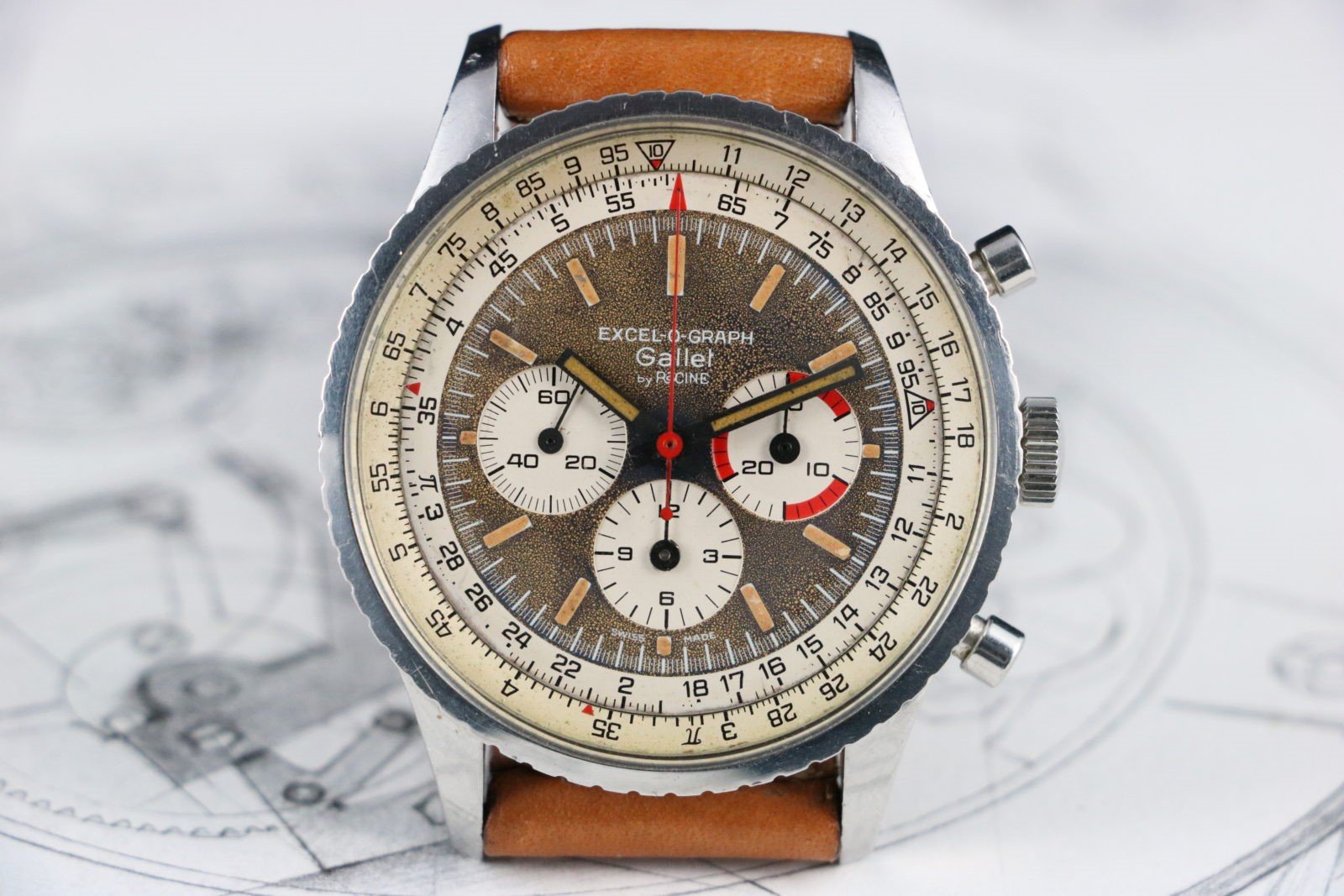
1965

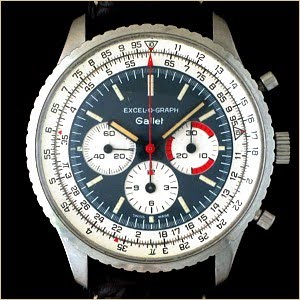
Gallet introduces the Excel-O-Graph. This pilot’s wristwatch features a rotating bezel with integrated slide rule for making navigational calculations during flight.

1970

Asian manufacturers begin releasing electronic quartz regulated timepieces onto the world markets. By continuing to build mechanical timepieces for a clientele not influenced by changing fads and convention, Gallet survives the so called "quartz crisis".

1975

Upon the death of Léon Gallet, sons Pierre and Bernard assume management of the company. They acquire the Racine Company, which has been struggling as a result of devaluation of the U.S. dollar.

1983

Excelsior Park closes its factory on 6 April due to the lack of family successors and a sizable decrease in orders of mechanical movements from its Gallet partner during the difficult "quartz crisis". To continue to support owners of Excelsior Park powered watches, Gallet acquires the balance of the company’s remaining inventory and assets. An attempt in 1984 by the Flume Company of Germany to revitalize Excelsior Park name proves unsuccessful.

1984

Wein Brothers, a Canadian distributor of timing instruments, contracts with the Gallet Company to manufacture rugged wristwatches for distribution to the US Government. To facilitate the initial transactions, the watch dials (faces) of these military specification watches are marked Marathon, a previously held Gallet trademark. Wein Brothers continues to distribute military timepieces and related products under the Marathon brand to the present day.

1990

Gallet supplies 30,000 “Navigator” wristwatches to the Marathon Company for distribution to the U.S. military. Prior to Marathon’s fulfillment of the contract, prototypes are arduously tested by the US Government to withstand the most adverse of circumstances. All examples exceed the military's strict requirements for sustaining accuracy and functionality during combat conditions.

1991

Pierre Gallet retires from the company due to ill health. His brother Bernard assumes control of the company, which continues to focus on the manufacture of professional-use timepieces.

1996

To facilitate expansion, Bernard Gallet enters into a partnership with B. Neresheimer Ltd., a company with over a hundred years experience in the manufacture and distribution of fine silver wares and high-end luxury goods.

2002

The Gallet factory is relocated from La Chaux-de-Fonds to Grandson, a canton of Vaud approximately one hour from Geneva. Walter Hediger, a member of the Neresheimer family, takes the reins of Gallet as its CEO.

2004

Company activity becomes concentrated near Zurich. Bernard Gallet remains active with the company until his death in 2006.

2008

Gallet & Co co-sponsors "Time in Office" at the National Watch and Clock Museum, an exhibition of timepieces worn by America’s presidents extending back to the pocket watches of George Washington. One of the featured items in the exhibit is the Gallet Flight Officer chronograph worn by Harry S Truman during his years in office as the 33rd president of the US.

2009

Gallet & Co co-sponsors "Time & Exploration" at the National Watch and Clock Museum, an exhibit highlighting the importance of time and timekeeping in the fields of exploration and navigation.

From Gallet & Co Website.

Please remember that this is an unofficial account of the history of this
company, Should you happen to find any mistakes with our information then
please let us know at
Email
Us
Gallet History watches history


1893


Berthe Courvoisier (1868-1936), daughter of Louis Philippe
Courvoisier and an heir to the family watch company, is wed to Georges Gallet,
son of Léon. Berthe Courvoisier and her brother Émile, together with Georges
Gallet and his sister Henriette, continue to manage the Courvoisier Frères watch
company. Georges Gallet assumes the role as co-director of the company.


1895


Gallet introduces the first wrist-worn watches for mass
consumption by men and women to the American market. These first
“wristwatches” are immediately rejected due to public perception as
being too unusual for women and too feminine for men. All unsold examples are
soon returned to Switzerland for disassembly. In spite of initial resistance to
this groundbreaking innovation, wristwatches are issued during WWI as a more useful
way for soldiers to tell time in combat situations. As a result, this new
concept gains acceptance, and is soon added to the offerings of numerous other
watch companies.


1896


Rail road pocket watches with chronometer grade movements
with patented regulators are created by Gallet under the Interocean brand name
and distributed by Timothy Eaton (T. Eaton Department Store) for railway use.


1896


Gallet wins a silver medal at the Swiss National Exhibition
in Geneva.


1899


Upon his death, Léon Gallet bequeaths a sum of 43,000 Swiss
Francs (today equivalent to approx. 1,000,000 US dollars) to the town of La
Chaux-de-Fonds, of which 25,000 Swiss Francs is used for the construction of
the Musée international d’horlogerie (International Museum of Watch Making). To
assist the museum in building its initial collection of timepieces, Georges
Gallet donates over 100 highly complex and valuable Gallet, Electa, and
Courvoisier watches. Georges Gallet serves as director of the museum for the
next twenty years.


1900


Shortly after Léon Gallet’s death, the company name is
changed back to Gallet & Cie (Gallet & Co.).


1905


Gallet wins a Diploma of Honor at the Liege Exhibition.


1906


The company name “Gallet & Cie, Fabrique
d’horlogerie Electa” is registered to reinforce Gallet’s ownership and
control of the Electa brand. Under the Electa name, Gallet produces its highest
quality timepieces.


1911


Henri Jeanneret-Brehm, a member of the esteemed Jeanneret
family of St. Imier watchmakers, purchases the Magnenat-Lecoultre factory with
financial assistance from the Gallet company.


1912


Gallet creates the first wristwatch for mass distribution to
include a full-sized constant seconds hand originating from the center of the
dial (face). This innovation proved useful for timing tasks that emphasized
seconds over minutes and hours, including the measuring of the human heart
rate. Gallet’s new “sweep second” wristwatches were issued to military nurses
and medics during World War I.


1914


Gallet wins the Grand Prize in the Chronometer category at
the Swiss National Exhibition in Berne.


1915


Gallet supplies hand held and cockpit mounted timers to the
British Air Force during WW I.  Movements are produced in Gallet’s Electa
workshop and marked with the Electa name.


1916


Gallet supplies wrist-worn timers to the British armed
forces during World War I. This early chronograph wristwatch was an obvious
transitional timepiece. While technically refined and reduced in size from a
traditional hand-held timer, it still retains the three-piece case, porcelain
enamel dial, and center button crown of its larger predecessor.


1917


Gallet wins the 1st place award for chronometer accuracy at
the Canton Observatory in Neuchâtel.


1918


Jeanneret-Brehm begins manufacturing under the company name
Excelsior Park. Deriving the name from Jenneret-Brehm’s previously registered
“Excelsior” trademark, the English variation of the French word for “park” is
utilized at the prompting of Gallet to support the collaborative efforts of the
two companies in their marketing focus on the American consumer. The
cooperative relationship of Excelsior Park and Gallet leads to the development
of a number of time recording mechanisms, including the calibre 40. These new
chronograph movements are utilized almost exclusively in Gallet and Excelsior
Park wristwatches, with a small number supplied to the Girard Perregaux and
Zenith companies when production capabilities allowed.


1927


Gallet introduces the “Regulator” and “Duo Dial”
wristwatches for the medical and technical professions. The large-sized lower
subsidiary seconds dial of the rectangular Duo-Dial and the predominant
resetting sweep-second hand of the Regulator simplify the task of calculating a
person’s per-minute heart rate.


1929


While Gallet develops viable markets for its new wristwatch
innovations, the company is able to survive the Great Depression by supplying
professional use “tool watches” to its military and industrial clients.


1935


As World War II becomes imminent, Gallet begins production
of wristwatches, boat clocks with 8-day movements, and military stopwatches for
Great Britain, Canada, and the U.S.A. At the start of World War II, production
again surpasses 100,000 watches annually.


1936


Gallet introduces the first water resistant cases for
protecting the delicate mechanism of chronograph wristwatches from the damaging
effects of humidity. This new innovation become standard on many models in
Gallet’s “MultiChron” line of professional use timepieces, as well as
the upcoming Flight Officer military issue pilot’s watch.


1938


Commissioned by Senator Harry S Truman staff for the pilots
of the U.S. Army Air Forces, Gallet creates the Flight Officer chronograph.
This wristwatch provides a combination of new innovations. Besides the ability
to accurately record events ranging from 1/5th second to 30 minutes in
duration, the rotating 12-hour bezel and dial (face) printed with the major
cities gives pilots the ability to calculate changes in the time as lines of
longitude are crossed. Truman wears a Gallet Flying Officer during his two
terms as US president.


1939


Gallet produces the Multichron Petite. The Petite is one of
the first wrist chronographs engineered exclusively for enlisted women assigned
to technical and scientific tasks during WWII. Powered by the 10 ligne Valjoux
69 movement, and measuring only 26.6mm in diameter, the MultiChron Petite
becomes the smallest mechanical chronograph manufactured to date.


1946


With the end of World War II, and the death of his father
Georges, Léon Gallet assumes management of the Gallet Company. Only minor
changes are needed to transform the appearance of Gallet’s military style
watches into trendy chronographs for sportsmen and civilian pilots.


1965


Gallet introduces the Excel-O-Graph. This pilot’s wristwatch
features a rotating bezel with integrated slide rule for making navigational
calculations during flight.


1970


Asian manufacturers begin releasing electronic quartz
regulated timepieces onto the world markets. By continuing to build mechanical
timepieces for a clientele not influenced by changing fads and convention,
Gallet survives the so called “quartz crisis”.


1975


Upon the death of Léon Gallet, sons Pierre and Bernard
assume management of the company. They acquire the Racine Company, which has
been struggling as a result of devaluation of the U.S. dollar.


1983


Excelsior Park closes its factory on 6 April due to the lack
of family successors and a sizable decrease in orders of mechanical movements
from its Gallet partner during the difficult “quartz crisis”. To
continue to support owners of Excelsior Park powered watches, Gallet acquires
the balance of the company’s remaining inventory and assets. An attempt in 1984
by the Flume Company of Germany to revitalize Excelsior Park name proves
unsuccessful.


1984


Wein Brothers, a Canadian distributor of timing instruments,
contracts with the Gallet Company to manufacture rugged wristwatches for
distribution to the US Government. To facilitate the initial transactions, the
watch dials (faces) of these military specification watches are marked
Marathon, a previously held Gallet trademark. Wein Brothers continues to
distribute military timepieces and related products under the Marathon brand to
the present day.


1990


Gallet supplies 30,000 “Navigator” wristwatches to the
Marathon Company for distribution to the U.S. military. Prior to Marathon’s
fulfillment of the contract, prototypes are arduously tested by the US
Government to withstand the most adverse of circumstances. All examples exceed
the military’s strict requirements for sustaining accuracy and functionality
during combat conditions.


1991


Pierre Gallet retires from the company due to ill health.
His brother Bernard assumes control of the company, which continues to focus on
the manufacture of professional-use timepieces.


1996


To facilitate expansion, Bernard Gallet enters into a
partnership with B. Neresheimer Ltd., a company with over a hundred years
experience in the manufacture and distribution of fine silver wares and
high-end luxury goods.


2002


The Gallet factory is relocated from La Chaux-de-Fonds to
Grandson, a canton of Vaud approximately one hour from Geneva. Walter Hediger,
a member of the Neresheimer family, takes the reins of Gallet as its CEO.


2004


Company activity becomes concentrated near Zurich. Bernard
Gallet remains active with the company until his death in 2006.


2008


Gallet & Co co-sponsors “Time in Office” at
the National Watch and Clock Museum, an exhibition of timepieces worn by
America’s presidents extending back to the pocket watches of George Washington.
One of the featured items in the exhibit is the Gallet Flight Officer
chronograph worn by Harry S Truman during his years in office as the 33rd
president of the US.


2009


Gallet & Co co-sponsors “Time &
Exploration” at the National Watch and Clock Museum, an exhibit
highlighting the importance of time and timekeeping in the fields of
exploration and navigation.


From Gallet & Co Website.


Please remember that this is an unofficial account of the history of this
company, Should you happen to find any mistakes with our information then
please let us know at

Email
Us


Filed Under: Luxury Timepieces Tagged With: luxury pieces, Luxury Timepieces, Old watches, Timepieces., Vintage watches, watches, watches history, World The Most Expensive Watches

FORTIS Watches AG was founded by Walter Vogt in 1912

February 24, 2023 by aabbady Leave a Comment

FORTIS Watches AG

1912

The Swiss village of Grenchen was and still is the residence of FORTIS when the company was founded by Walter Vogt in 1912.

Mr. Vogt was a great pacesetter and pioneer: his original beliefs still forms the basis of today’s company’s policy. “..the manufacture of high-quality quality Swiss watches, in innovative designs at inexpensive prices..”

1924

The most significant year in the history of FORTIS was in 1924, when Walter Vogt met John Harwood, the British inventor of the automatic wristwatch. Harwood had already been looking for two years to find an manufacturing partner to mass produce his invention in Switzerland.

In the founder of FORTIS, he discovered an en-lighted defender of “the automatic wristwatch” concept. Walter Vogt backed the project and provided significant financing so that he could implement this invention into production.

1926

The world’s first self-winding wristwatch in true production was the “Harwood Automatic” and was presented at Basel Switzerland.

1930s,

FORTIS produced two more classic automatic watches which became famous products: First came the “Rolls”, a wristwatch, which was to become legendary with a winding system developed by Leon Hatot of Paris. The watches name was derived from the motion of the movement inside the case to wind the movement.

1931

FORTIS produced the Autorist, which used another automatic mechanism invented by John Harwood. The watch was powered by movements of the strap by means of its attachment to the watch.

1937

On the occasion of the company’s 25th anniversary FORTIS manufactured their first chronographs which are admired for their precision until today. “Wandfluh”, the name of the Jura massive close to Grenchen as name of the FORTIS Chronograph became known throughout the world.

1943

The Latin word meaning of FORTIS is “strong” and with the presentation of the first waterproof watches from Switzerland FORTIS again perfectly meets the market demands with their most successful model “Fortissimo”.

 1950s

Some decades later to its first appearance on the market the alarm wrist watch enjoys renewed popularity thanks to the efforts of FORTIS.

1954

FORTIS takes up the manufacturing of the alarm watch, thus becoming closely associated with the worldwide distribution of the most serviceable timepiece ever marketed.

1956

FORTIS wins the leading chronometer awards conferred by the Swiss Institute for Official Watch Timekeeping Tests, awarded to their waterproof alarm watches of the “Manager”-series. Every single “FORTIS-Manager” alarm watch tested, obtained the supreme distinction “especially good results”.

Timepieces of the Late 1950s to Early 1980s

1957

In Tokyo 600 watchmakers celebrated the so-called “FORTIS day” in Yamaha hall on the 26 th of November. The company invited the Japanese watchmakers to promote the new electrical regulation system “BEP” presented by FORTIS and as thus the good relationship with the members of the Japanese watchmakers society.

1962

The name of FORTIS- synonymous worldwide for reliable automatic watches from Switzerland- continues with their jubilee watch on the occasion of the company’s 50th anniversary “Stratoliner” and the “Spacematic”, a 25 atmospheres tested absolutely wateresistant anchor watch, high precision automatic, with date indication and chosen by the members of the American astronauts team that year.

1965

With the upcoming quartz watches from Japan FORTIS like all the other Swiss brands had to face a competition on the market, which a lot of them could not stand.

The FORTIS answer on this challenge, based on the companies experiences in water resistant diver watches was the development of the “Flipper” watch. For the American market: the “FORTIS-Cobra”, a most striking design which was a real hit and enormous success in those swinging times.

1975

FORTIS set the pace in watch fashion with the “Flipper quartz leader” model, a great success in more than 40 countries the following years. This watch range incorporated the original FORTIS Container System, allowing the movement and bracelet to be interchanged within seconds.

1982

The “Flipper quartz leader” provides besides steel and 18 ct. gold bracelets a wide range of colorful straps and thus made this FORTIS design a hit in the early 80s, worn for example by The Rolling Stones, Roman Polanski, Leonard Bernstein, etc.. The “…aristocrat of the plastic watches”..V. Philbert, Europa Star.

1987

On the occasion of the company’s 75th anniversary FORTIS sets a trend by relaunching the automatic wristwatches which had been synonymous for the brand in the glory past. Besides the Original FORTIS Container System with the successful range of the “FORTIS Logo Swiss” collection and the Harwood being the world’s first automatic wristwatch in series production, FORTIS relaunched the legendary pilot’s watches with their clear functions and easy to read dials in the typical FORTIS design that year and marks the renaissance of mechanical watches, a trend which a lot of Swiss watch companies followed until today.

1992

FORTIS steps into space on board of the first advertising and art painted space craft, a Russian proton rocket. One dial of a limited series of the FORTIS Stratoliner automatic chronograph participates in the first “space museum” in orbit. Since then a close cooperation between FORTIS and several Russian space institutions lead to the development of the FORTIS OFFICIAL COSMONAUTS CHRONOGRAPH, which was tested on the border of modern physics and under spaceflight simulation and proved its reliability on the wrist of the Russian cosmonauts even in open space.

1994

After two years of testing and preparation the Yuri Gagarin Russian State Scientific-Research Test Center of Cosmonauts Training in Star City chose the FORTIS OFFICIAL COSMONAUTS CHRONOGRAPH to be part of their cosmonauts official equipment. Developed in intensive cooperation with the experienced experts of the center the FORTIS automatic chronograph received its unique design which meats the cosmonauts needs in every detail of its function.

The space mission EUROMIR I crew was the first to which the FORTIS Official Cosmonauts Chronograph Sets were presented to in October. Since then the FORTIS Sets were presented to all Russian cosmonauts of the Gagarin Center and the FORTIS Chronographs proved their reliability on the wrists of astronauts and cosmonauts in their professional activity and during several extra vehicular activities in open space.

1995

Deeply involved in the world of aviation the FORTIS Chronographs were the timekeeping instruments of the world height record on a MIG 25PU double seated -non experimental- aircraft with a civil passenger, honored by the Guinness book of records.

 1996

After a successful launch of the FORTIS Cosmonauts and Pilot’s collection in Europe FORTIS started its market approach with a spectacular debut in Asia.

1997

The FORTIS OFFICIAL COSMONAUTS CHRONOGRAPH was chosen to be the official watch of the Russian-German space mission MIR 97. On the occasion of the company’s 85th anniversary the world’s first automatic chronograph with mechanical alarm was presented at the Basel fair. In close cooperation and as per the demands of the cosmonauts developed, FORTIS exposed this mechanical specialty in a limited anniversary edition of 100 pieces in platinum, to be followed by a steel version later.

1998

The Hungarian Air Force uses the FORTIS Pilot Professional Chronograph Automatic to equip their pilots.as well as several other countries.

2009

The Fortis brand name is still used by BNP Paribas in Belgium, but its colorful logo was discontinued in 2009 shortly after the acquisition.

From Fortis website.

Please remember that this is an unofficial account of the history of this
company, Should you happen to find any mistakes with our information then
please let us know at

Email
Us

Filed Under: Luxury Timepieces Tagged With: Ancre, FORTIS Watches AG, luxury pieces, Luxury Timepieces, Old watches, Timepieces., Vintage watches, watches, watches history, World The Most Expensive Watches

adidas watches history

February 22, 2023 by aabbady Leave a Comment

Adidas

adidas is a multinational manufacture corporation based at Bavaria Germany. They are famous with their sports product such shoes, clothing and accessories which include the watches.

adidas was founded on 18 August 1949 by Adolf Dassler (Adi Dassler) where is adidas get their name from.

In 1936 Dassler name become known to the world when he chooses U.S. sprinter Jesse Owens about to use his sports shoes in the Olympic. Dassler name take off after Jesse Owens win the gold medal as sprinter.

After the second World Ware after Adolf separated from his brother he lunches Adidas that become the second largest sports manufacture after Nike.

Fossil makes watches for brands such as Adidas, Emporio Armani, Karl Lagerfeld, Michael Kors, Marc by Marc Jacobs, Burberry, DKNY, Diesel and Armani Exchange.

Fossil Group founded in 1984 (based in Texas), is an American designer and manufacturer of clothing and accessories, primarily watches when they acquired Zodic Watch Company from Genender International in 2001 and 2004 they purchase of Michele Watch. With this success in the watch industry they were able to make the watches for different company and adidas is one of them.

Here is the quote from Fossil group website about Adidas:

“adidas Originals


adidas Originals is the iconic sportswear brand for the street. It is born in sport heritage, but lives in contemporary lifestyles and strives to inspire all in their everyday lives. It is marked by the iconic Trefoil logo that was first used in 1972.  Today, adidas Originals brings adidas heritage from the past into the now, playing on its ability to stay relevant for all walks of life regardless of time, place, style and passions.  adidas Originals Timing uses the same philosophy, fusing traditional watch design elements with modern technique and detail, resulting in a sleek, distinctive look and feel that is unique amongst the fashion watch landscape.”

Please remember that this is an unofficial account of the history of this company, Should you happen to find any mistakes with our information then please let us know at

Email Us

Filed Under: Luxury Timepieces Tagged With: Ancre, luxury pieces, Luxury Timepieces, Old watches, Timepieces., Vintage watches, watches, watches history, World The Most Expensive Watches

World The Most Expensive Watches

February 21, 2023 by aabbady Leave a Comment

World The Most Expensive Watches

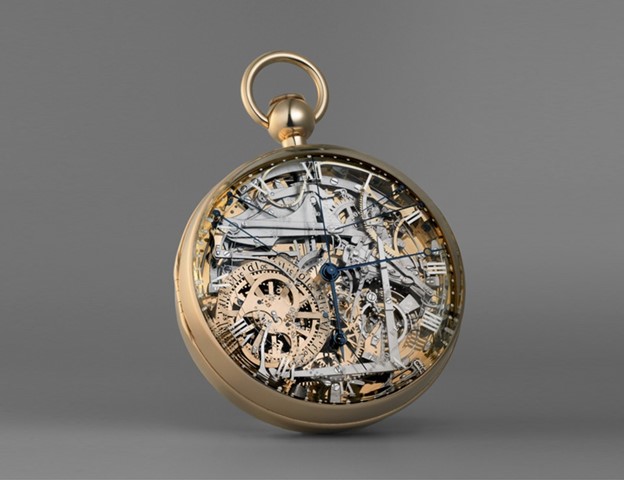
BREGUET GRANDE COMPLICATION MARIE-ANTOINETTE

  • Price for $30 million – The most expensive for watch
  • The work on this watch start in 1782 by Abraham-Louis Breguet and was finished in 1827 by his son, 4 years after his death.
  • The watch completed 34 year later so Marie Antoinette could see it
  • Currently the watch secured at the L. A. Mayer museum
  • Stolen in 1900 and found in 2007

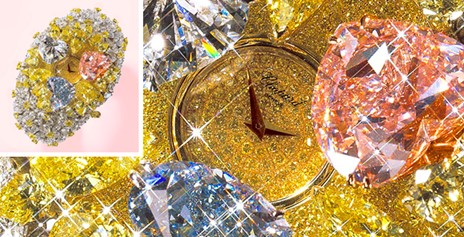
CHOPARD 201-CARAT WATCH

  • It made from the following diamonds.
    • 1 heart-shaped diamond, natural Fancy Pink, Internally Flawess, 15.37 carats.
    • 1 heart-shaped diamond, natural Fancy Blue, VS2, 12.79 carats.
    • 1 heart-shaped diamond, D color, Flawless, 11.36 carats.
    • 3 pear-shaped diamonds, natural Fancy Intense Yellow, 8.45 carats total.
    • 26 pear-shaped diamonds, natural Fancy Intense Yellow, 17.07 carats total.
    • 48 round diamonds, natural Fancy Yellow, 8.81 carats total.
    • 260 pear-shaped diamonds, all D color, Flawless, 60.94 carats total.
    • 91 round diamonds, D color, Flawless, 10.29 carats total.
    • 443 FC diamonds, natural Fancy Intense Yellow, 4.95 carats total.

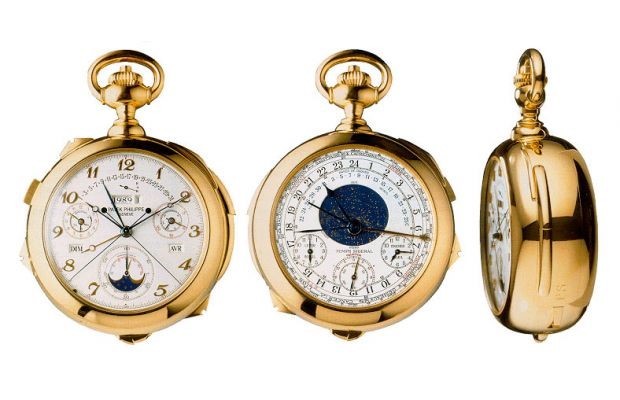
PATEK PHILIPPE – HENRY GRAVES – POCKET WATCH

  • Price at $11 million
  • The most expensive pocket watch
  • Made in 1933 by Pateck Philippe himself and it took 5 years to complete
  • Made of 18 K gold

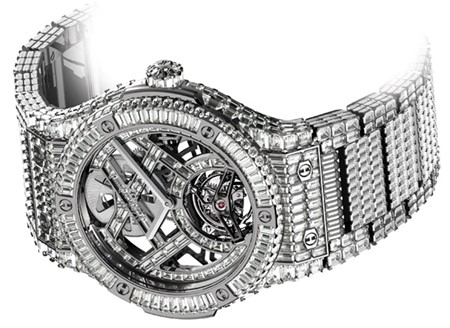
Hublot Classic Fusion Haute Joaillerie – BIG BANG

  • Over $5 million price tag
  • The 1,185 diamonds covering every surface of the watch, from the case and bracelet to the open worked dial.
  • It is one of the most expensive watches ever made by Hublot.
  • Introduced in 2013.
  • It took more than 2000 man-hours

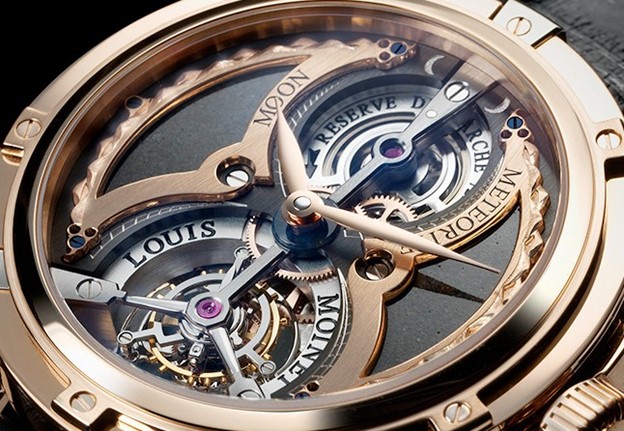
LOUIS MOINET METEORIS WATCH

  • Price over $4.5 Million
  • Only 4 watches made.

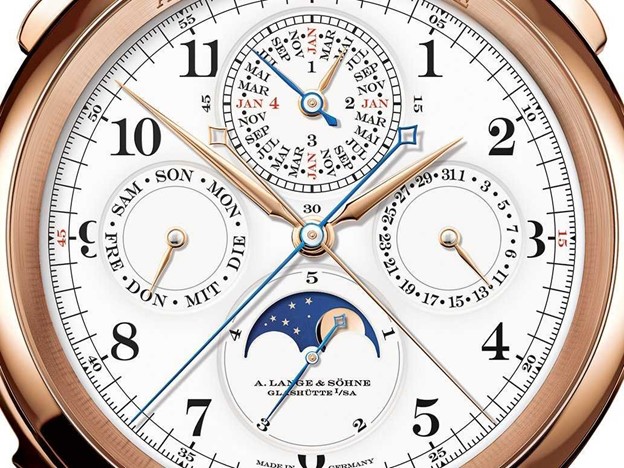
Lange & Söhne Grand Complication

  • Price around $2.5 million

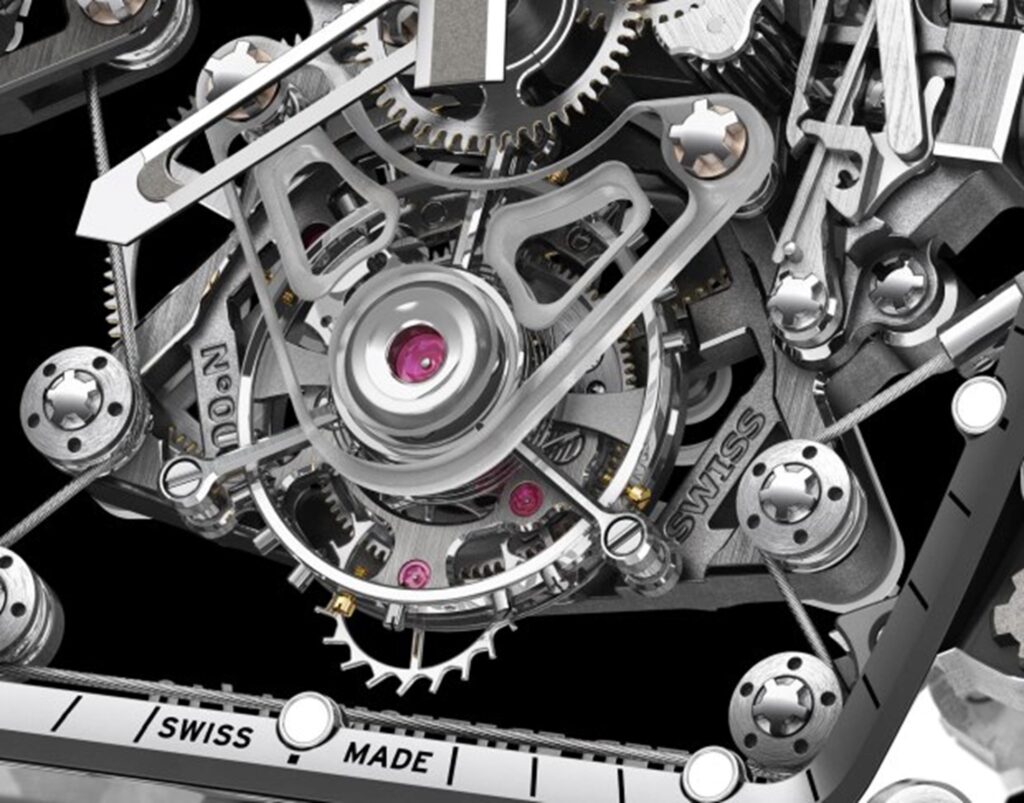
Richard Mille Tourbillon RM 56-02 Sapphire

  • Price over $2 million

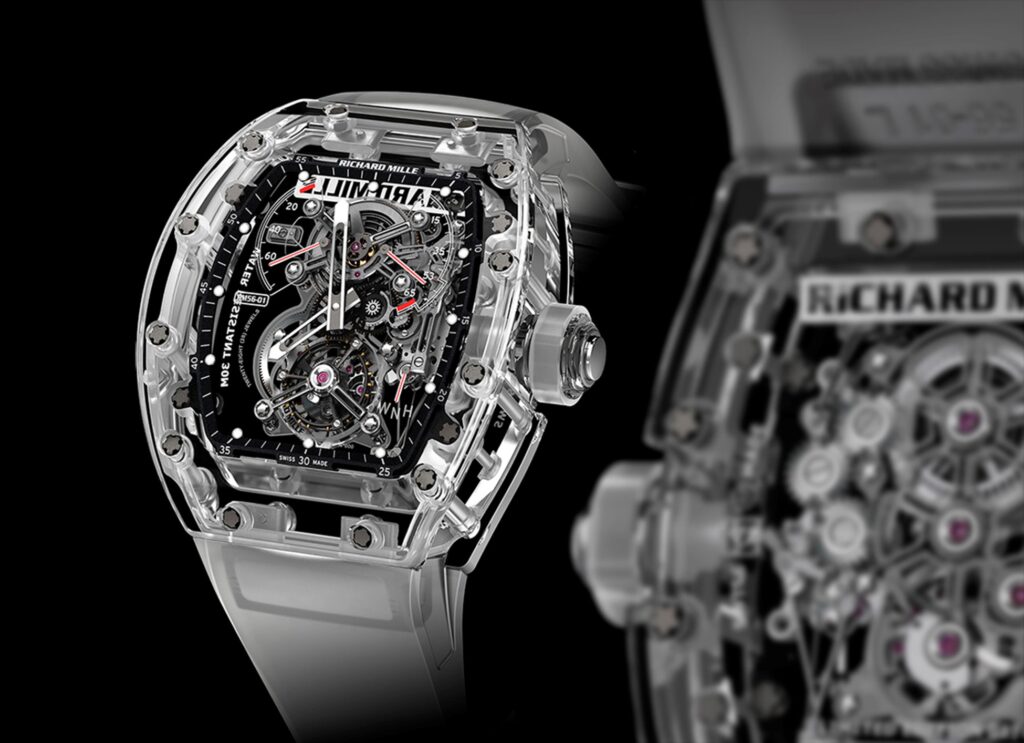
Richard Mille RM 56-01

  • Price at $1,850,000
  • Made from sapphire glass case

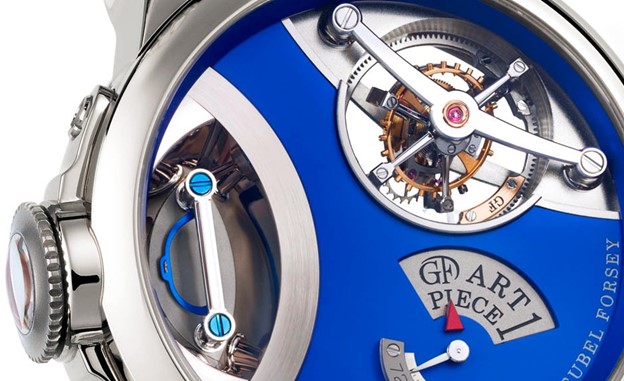
Greubel Forsey Art Piece 1

  • Revealed on 2013 and quickly rose to the upper echelon of the “most expensive watches ever made” rankings,
  • The price of CHF 1.5 million (approximately $1.6 million)


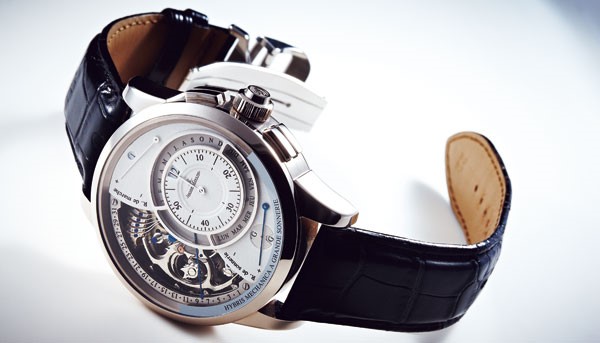
Jaeger-LeCoultre Hybris Mechanica à Grande Sonnerie

  • Retail price around $ 1.5 Million.
  • The watch contain of 1,300 parts,
  • It was released in 2009

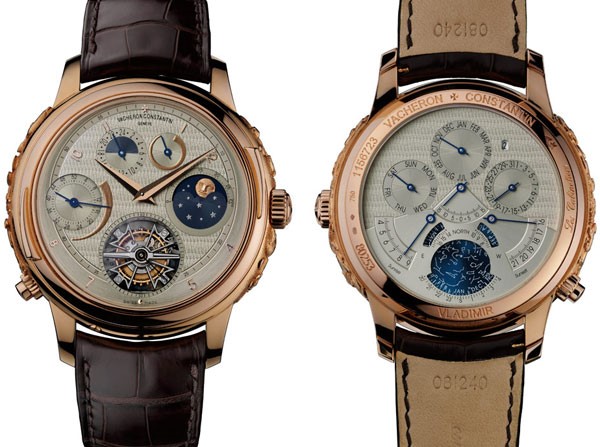
Vacheron Constantin Tour de I’Ile

  • Celebrated the brand’s 250th anniversary, with 7 pieces each is priced at over $1,5 million.
  • It has 2 faces (front and back).
  • It contain 834 Parts

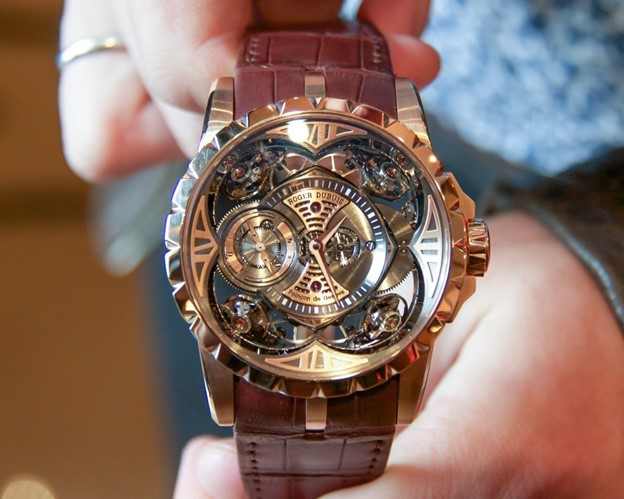
Roger Dubuis Excalibur Quatuor

  • The Quatour is the most expensive watch produced by Roger Dubuis around $1,125,000 U.S
  • The case made of silicon, the first such watch of its kind a material with half the weight of titanium and four times the hardness.
  • It takes 2,400 man-hours to build, is made from 590 distinct parts

Please remember that this is an unofficial account of the history of this company, Should you happen to find any mistakes with our information then please let us know at

Email Us

Filed Under: Luxury Timepieces Tagged With: luxury pieces, Luxury Timepieces, Old watches, Timepieces., Vintage watches, watches, watches history, World The Most Expensive Watches

Primary Sidebar

Recent Posts

  • What do you know about Seiko Watch
  • All you need to know about TAG Heur watch
  • All you need to know about Timex watch
  • All you need to know about The Victorinox Swiss Army watch
  • All you need to know about Zenith watch

Recent Comments

Archives

  • December 2025
  • February 2025
  • March 2023
  • February 2023

Categories

  • about Zenith watch
  • Luxury Timepieces
  • Seiko Watch
  • TAG Heur watch
  • The Victorinox Swiss Army watch
  • Timex watch
  • Uncategorized

Copyright © 2026 · watchcue.com